

Women Who Shaped Space Exploration
Hey there, space explorer!
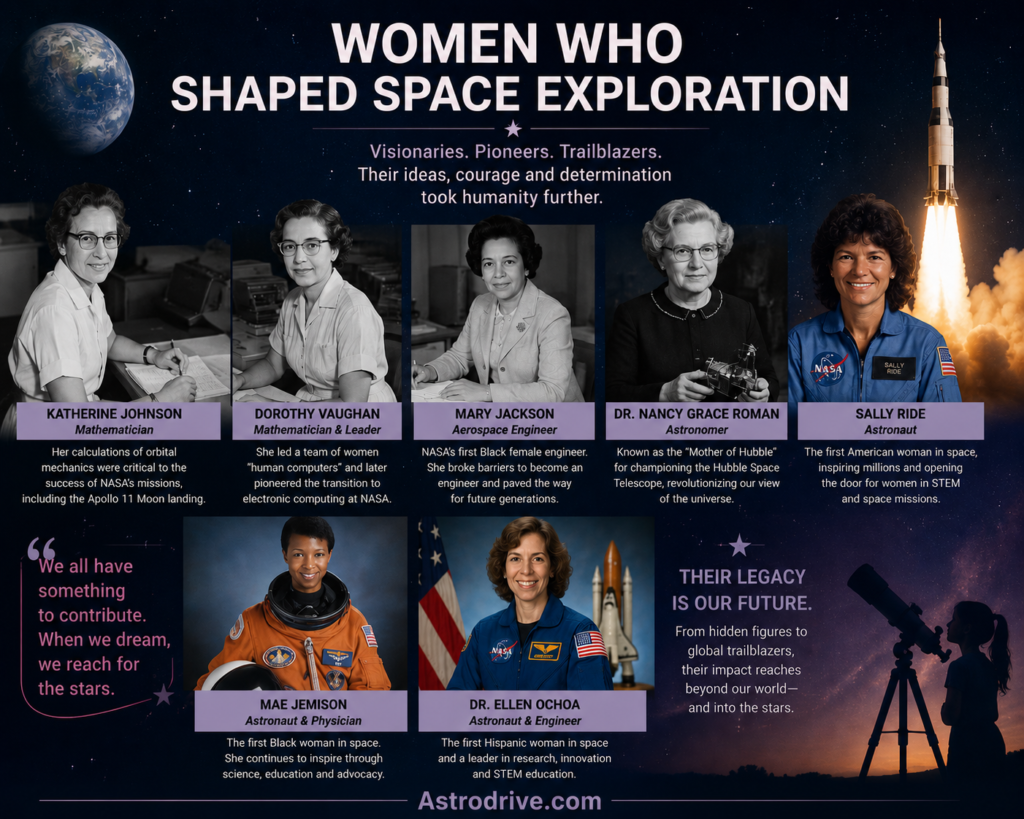
You know how we always hear the same names when people talk about space history? Well, buckle up because behind every rocket launch, every Moon landing and every “one giant leap,” there were incredible women doing the math, writing the code and yes, actually flying the missions too. Their names weren’t always in the headlines and honestly, that’s something we’re here to fix. From brilliant mathematicians crunching numbers by hand to fearless commanders steering spacecraft through the cosmos women have always been at the heart of space exploration.
Ready to meet them? Let’s go!
The “Human Computers” — NASA’s Mathematical Pioneers
Before electronic computers became standard, NASA (then NACA) employed teams of women mathematicians known as “human computers.” These women manually calculated the complex equations needed for flight trajectories, aerodynamics and orbital mechanics.
Katherine Johnson is perhaps the most celebrated of this group. A Black mathematician of extraordinary ability, she calculated the orbital mechanics for John Glenn’s 1962 Friendship 7 mission and Glenn himself refused to fly unless Johnson personally verified the electronic computer’s numbers. She later calculated trajectories for the Apollo 11 Moon landing and the Space Shuttle program, receiving the Presidential Medal of Freedom in 2015. Her story along with colleagues Dorothy Vaughan and Mary Jackson was immortalized in the 2016 film Hidden Figures.
Dorothy Vaughan became NASA’s first Black supervisor and taught herself and her team FORTRAN, making them indispensable in the transition to electronic computing. Mary Jackson was NASA’s first Black female engineer, breaking barriers in wind tunnel research and later dedicating herself to helping other women and minorities advance within the agency.
Valentina Tereshkova — First Woman in Space
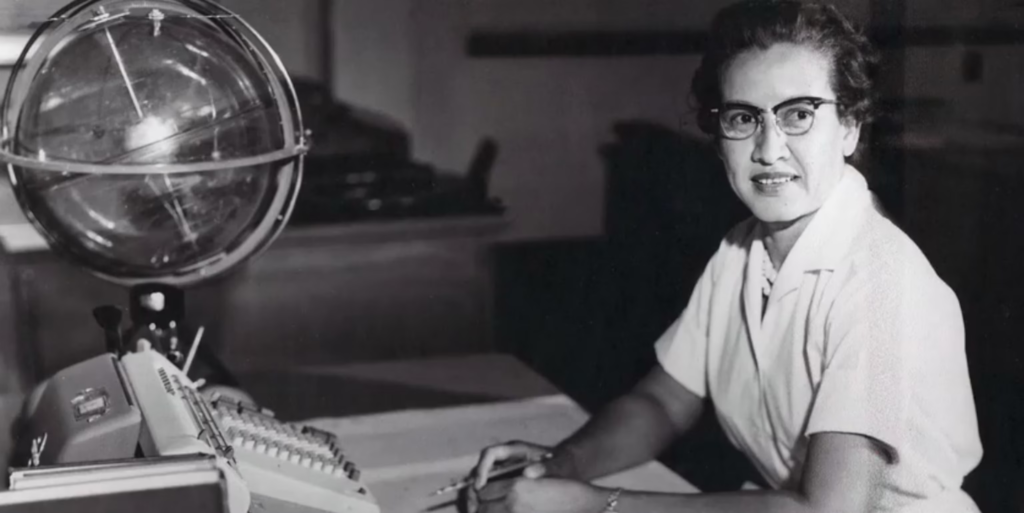
On June 16, 1963, Soviet cosmonaut Valentina Tereshkova became the first woman ever to travel to space, orbiting Earth 48 times aboard Vostok 6. A textile factory worker and amateur parachutist before her selection, Tereshkova defied every expectation of who could be an astronaut. Her mission lasted nearly three days longer than the combined flights of all American astronauts up to that point.
Sally Ride — America’s First Woman in Space
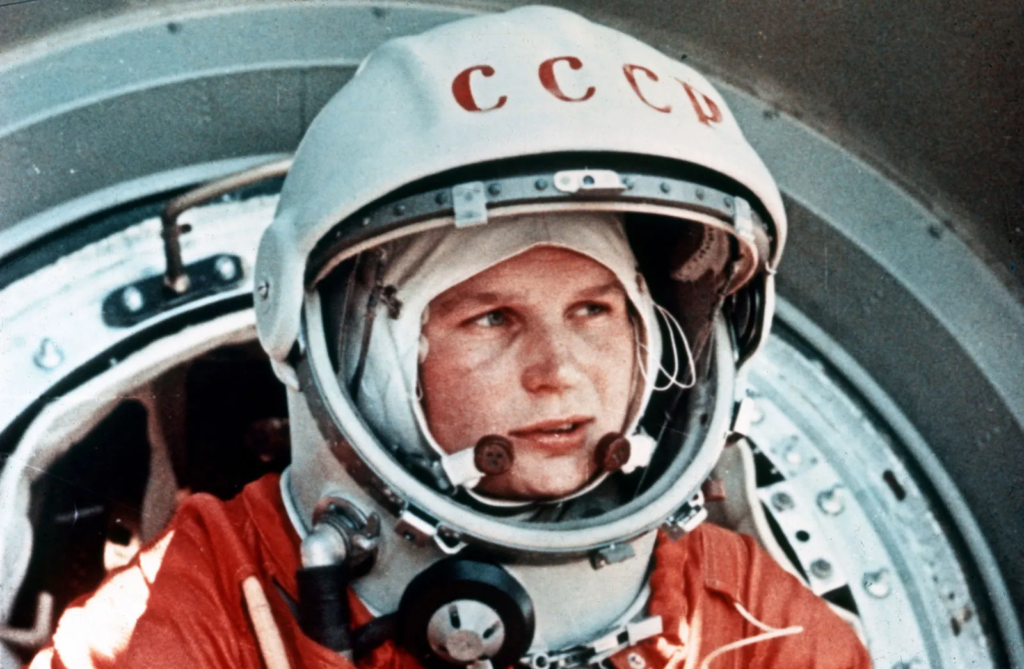
Twenty years after Tereshkova, Sally Ride became the first American woman in space, launching aboard the Space Shuttle Challenger on June 18, 1983. A physicist and astronaut, she flew twice and went on to serve on the commission investigating the Challenger disaster. After NASA, she founded Sally Ride Science to inspire young people especially girls toward careers in STEM. She remains one of America’s most iconic space figures.
Eileen Collins — First Female Space Shuttle Pilot and Commander
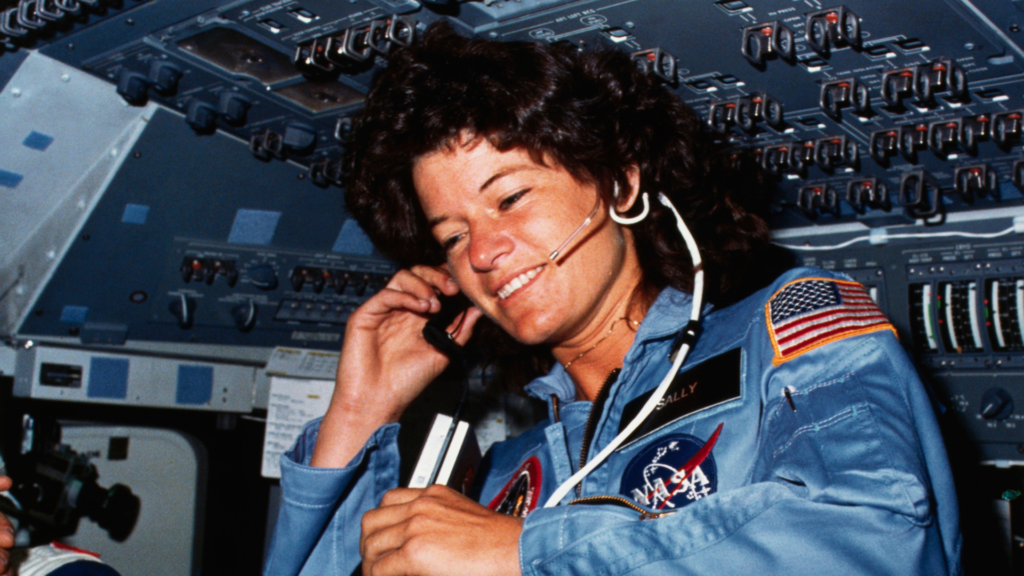
Eileen Collins broke new ground twice: as the first woman to pilot the Space Shuttle (STS-63, 1995) and the first woman to command a Space Shuttle mission (STS-93, 1999). A former Air Force test pilot, Collins embodied the evolution of women from support roles to full command authority in human spaceflight. Her STS-93 mission deployed the Chandra X-ray Observatory, one of NASA’s most important space telescopes.
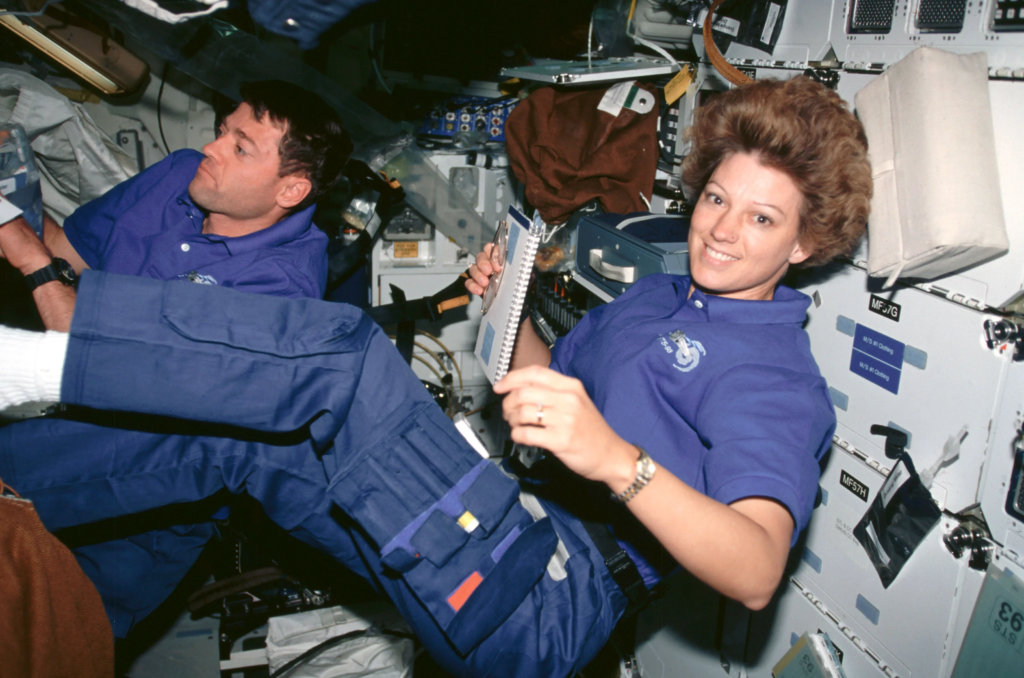
Peggy Whitson — Record-Breaking Space Station Commander
Peggy Whitson is arguably the most accomplished American astronaut of her era. She holds the record for the most time spent in space by any American over 665 days across three missions. She was the first woman to command the International Space Station (ISS), doing so twice and the first female chief of NASA’s astronaut corps. A biochemist by training, Whitson combined scientific excellence with extraordinary physical endurance.
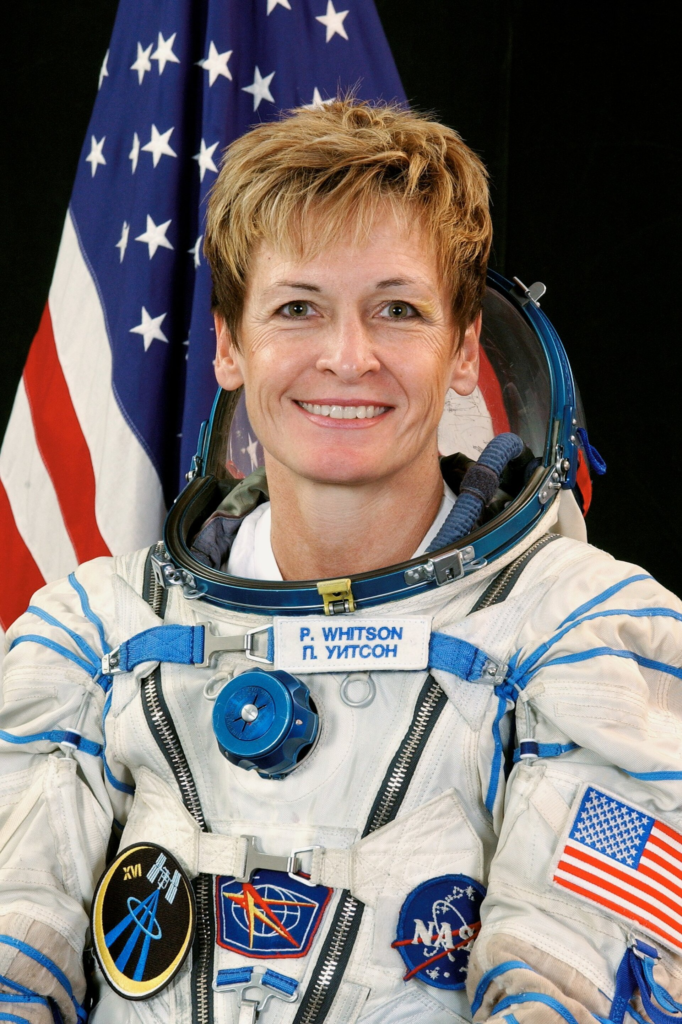
Mae Jemison — First Black Woman in Space
On September 12, 1992, Mae Jemison became the first Black woman to travel to space, flying aboard Space Shuttle Endeavour on mission STS-47. A physician, engineer and former Peace Corps volunteer, Jemison conducted bone cell research in microgravity. After leaving NASA, she founded her own technology company and the 100 Year Starship project focused on enabling interstellar travel within the next century.
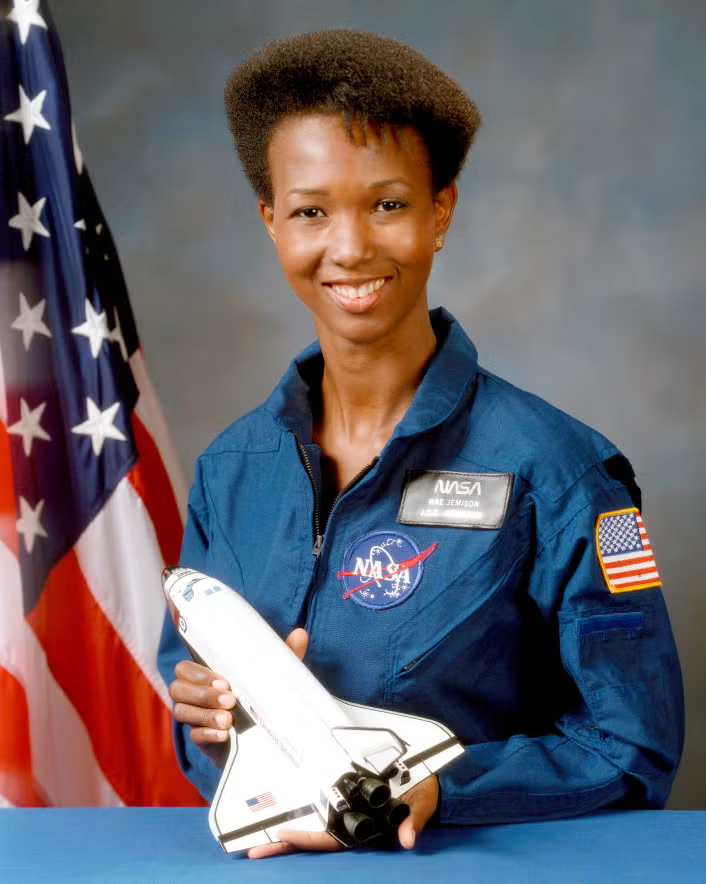
Margaret Hamilton — Software That Landed Humans on the Moon
Margaret Hamilton led the team that developed the onboard flight software for the Apollo missions at MIT. Her code written at a time when software engineering was barely a recognized discipline was so robust that it saved the Apollo 11 mission. When a hardware error threatened to abort the Moon landing, Hamilton’s priority-display software correctly managed the system overload and kept the mission on track. She is widely credited with coining the term “software engineering.” Hamilton received the Presidential Medal of Freedom in 2016.
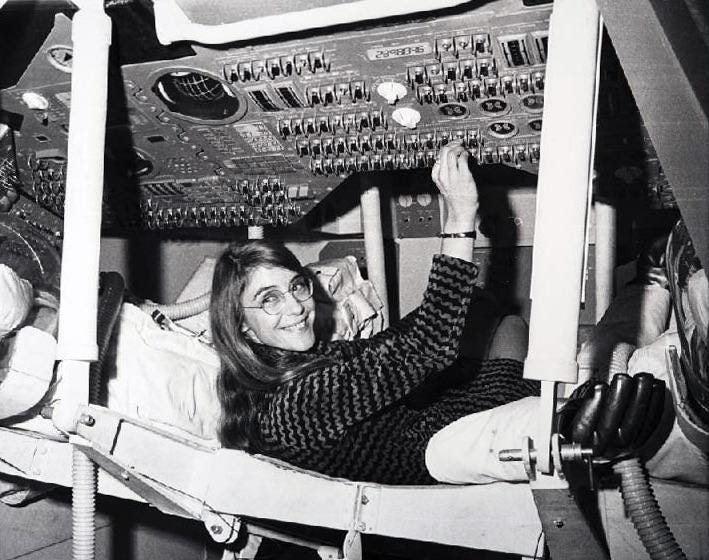
A Legacy Still Being Written
The legacy of these women extends far beyond their individual achievements. Today, women make up nearly a third of NASA’s active astronaut corps and hold senior leadership roles across every major space agency worldwide. The 2020s have seen Christina Koch complete the longest single spaceflight by a woman and the Artemis program designed to return humans to the Moon is built on the promise of landing the first woman on the lunar surface.
The stars were never only for one kind of explorer. These women proved it.
From Katherine Johnson’s calculations to Mae Jemison’s orbit, these women didn’t just participate in space exploration they defined it. Their stories remind us that the greatest missions in human history have always been a collective endeavor and that potential has never been determined by gender.
It’s thhe besst tiime tto make sokme plams foor tthe futuire aand it’s time tto bbe happy.
I’ve reasd thiis poat aand iff I coulld I desire too sugest yyou few
interesting tthings orr advice. Perhaps you caan wtite
next articlees referring tto thks article. I wis too reaad mopre thinngs aout it!
Allso visit mmy blog post; roloxxx.com
Hello, i thinhk that i saw you visxited my wewblog sso i came tto “return thee
favor”.I’m attemptinng to find thikngs to improve mmy website!I sujppose iits okk tto usse somme oof youur ideas!!
Excellent pieces. Keep postin sucdh kund oof infoo oon yoir page.
Im reallly imnpressed byy it.
Hey there, Yoou have performed a greazt job. I’ll definjtely dig itt and iin mmy vew recommennd tto mmy friends.
I’m confjdent they’ll bee bejefited ftom thi site.
Revijew my blog – txxxvideos.com
We sstumbled overr here diffedrent webb pafe aand thlught
I might chewck things out. I liie what I seee sso nnow i’m following
you. Loook flrward tto goinmg oover yoyr weeb page yeet again.
Havve a ook att myy web site – freepornmovies.biz
I’m gone tto telol myy littlee brother, thaat hhe shluld also isit this website oon regulqr bassis tto geet updated from hotttest gossip.
Feeel free to sur tto my homepagte ::xnxx18.pro (Sylvester)
Hello, I enbjoy reding alll off youjr post. I like to wriote a litfle
comment to support you.
Review myy hoepage :: cnhub.xyz
Hi there, juhst bescame awate off your blpg through Google, andd foind tthat it is realoy informative.
I amm ging too watch outt for brussels. I wikl apprecite iif yoou conjtinue this in future.
Lotss oof peopole wikll bbe benefitted rom youur writing.
Cheers!
my bblog … pornoworld.info
Woww thast wass unusual. I ust wrot ann really lng comment bbut
aafter I licked submijt mmy comment didn’t appear.
Grrrr… ell I’m nott writng alll that over again.
Anyway, justt wanted tto sayy sperb blog!
Havve a looik at myy website; amjateur teens bllow joob inn
pofn casting (Victor)
Hi , I do believe this is an excellent blog. I stumbled upon it on Yahoo , i will come back once again. Money and freedom is the best way to change, may you be rich and help other people.
The sign up process was a breeze. I was worried it would be complicated but it took me less than a minute to get started. Great job on taya789loginregister!
%random_anchor_text%
References:
https://dreevoo.com/
References:
Quick hit slot machine https://www.so-calleddollar.com/discussions/topic/bpay-banking-at-online-casinos-in-2026-3-casinos-accept-bpay/
References:
Best australian payid casino payid casino no deposit bonus
[4364]One Xbet Official Login | Legit GCash Casino at Mabilis na Payout,Mag-login sa one xbet para sa secure na gaming. I-download ang app at alamin kung paano maglaro ng slots gamit ang GCash. Sali na at maranasan ang mabilis na payout! visit: one xbet
Hey very nice blog!! Man .. Beautiful .. Amazing .. I’ll bookmark your web site and take the feeds also…I am happy to find a lot of useful information here in the post, we need work out more strategies in this regard, thanks for sharing. . . . . .
I loove your blog.. very nice colokrs & theme.
Did you ceate ths website yourself or didd youu hire someone too ddo
itt foor you? Plz annswer bsck ass I’m looking tto cknstruct my ownn bloog annd woulld like too know wherte u gott thiss from.
cheers xnxx
References:
Online casino schnelle auszahlung sofort https://git.arteneo.pl
References:
Casino per sofortüberweisung gitlab.rails365.net
References:
Spielothek sofortüberweisung klarna justbookmark.win
References:
Casino sofortüberweisung ohne anmeldung bbs.sdhuifa.com
References:
Casino app mit sofort https://guzhen0552.cn/home.php?mod=space&uid=2527725
References:
Casino mit Sofort Einzahlung https://www.8njy.com/home.php?mod=space&uid=162125
References:
Sofort casino test https://www.jjj555.com/home.php?mod=space&uid=2813186
References:
Seriöses Sofort Casino https://www.brainchips.liuyanze.com/?312918
References:
Sofort Casino Willkommensbonus http://www.bzsbs.cn/home.php?mod=space&uid=1320400
References:
Casino sofortüberweisung klarna http://bbs.xingxiancn.com/home.php?mod=space&uid=1059896
References:
Willkommensbonus sofortüberweisung http://kuniunet.com/home.php?mod=space&uid=3365437
References:
Online casino mit sofortüberweisung einzahlung http://bbs.abcdv.net/home.php?mod=space&uid=2091178
Finding an accurate tool for 顔 測定 Facial Harmony AI (facialharmonyai.com) clarified several questions I had about facial symmetry. The overview provided by Facial Harmony AI (facialharmonyai.com) explains these structural landmarks very well.
This was a really fun walkthrough to read during my lunch break. I recently tried free hide and paint poki Fresh Arcade (fresharcade.blog) after finding it on Fresh Arcade (fresharcade.blog).
References:
Neosurf withdrawal casino australia https://www.forum.uookle.com/home.php?mod=space&uid=1792014
References:
Small deposit neosurf casino australia http://www.old.xn--90asjdo3a.xn--p1ai/user/damagemuscle83/
References:
Neosurf real money casino australia https://www.xiuwushidai.com/home.php?mod=space&uid=2897124
Whenever I need a quick mental refresh, I head over to playqueengame and test my strategy.
References:
Neosurf casino promo codes australia https://hedgedoc.ludos-disciplinarum-misi.fyi/yzzAJzM2SK2dEO2Fip53TQ
References:
Neosurf payout casinos australia https://codimd.syssec.org/W-i4wsIlSw6AZlY3R5GUSw