

Cosmic Expansion Crisis
Hey there!
What if the universe isn’t behaving the way we thought?
Scientists are seeing something strange when they study the early universe, they get one rate of expansion but when they look at nearby galaxies, they get a faster one. Both seem right, yet they don’t match. This mystery is called the Cosmic Expansion Crisis and it’s making researchers question what we really know about the universe.
Could something be missing in our understanding… or are we on the edge of discovering new physics?
What is the Cosmic Expansion Crisis?
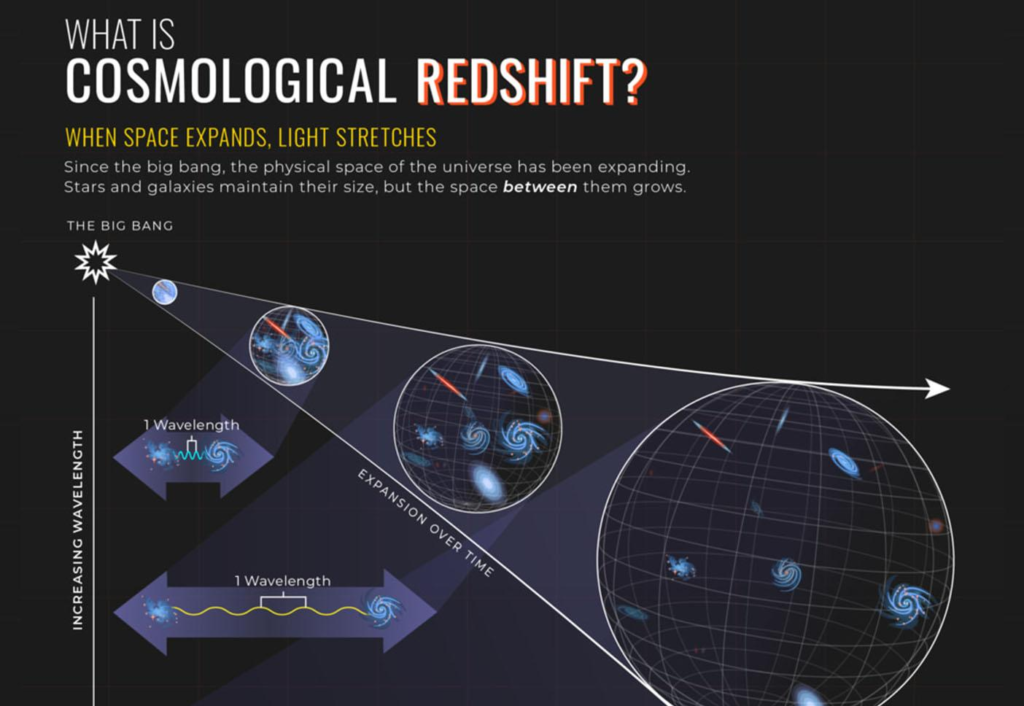
The Cosmic Expansion Crisis refers to a major unresolved problem in cosmology: scientists cannot agree on how fast the universe is expanding.
This expansion was first discovered by Edwin Hubble who showed that galaxies move away from us and the farther they are, the faster they recede. This relationship is known as Hubble’s Law.
Today, the expansion rate is described by a number called the Hubble constant. But here’s the problem: we now have multiple precise ways to measure it and they don’t match.
The Core Problem: The “Hubble Tension”
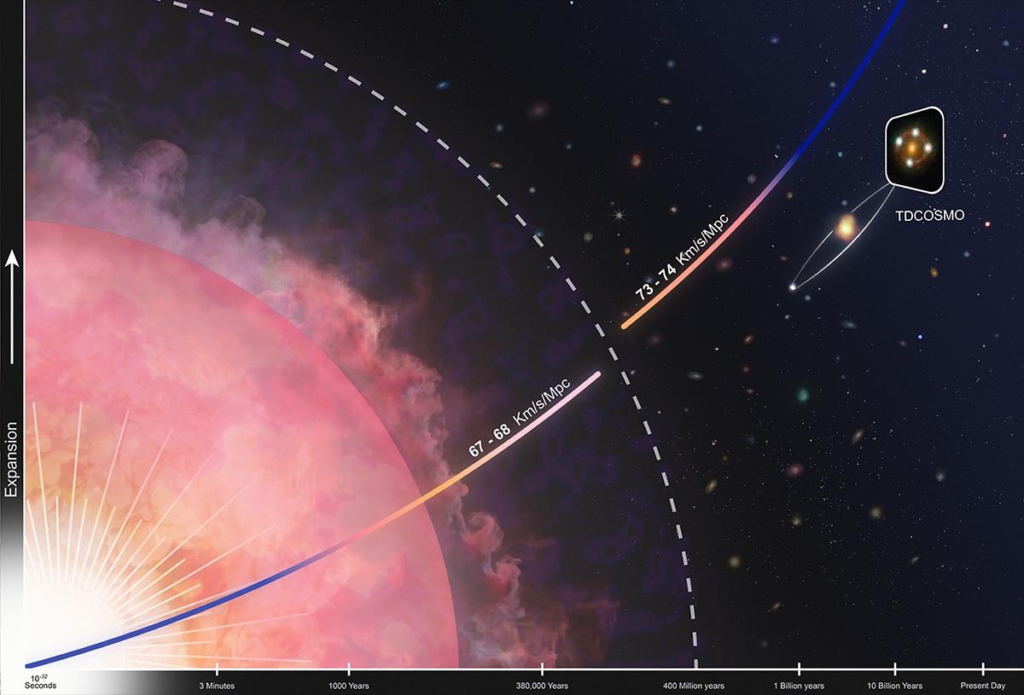
This mismatch is called the Hubble tension.
There are two main approaches:
1. Early Universe Method
- Uses radiation left over from the Big Bang (the cosmic microwave background).
- Predicts a slower expansion (~67–68 km/s/Mpc).
2. Late Universe Method
- Uses nearby stars and exploding supernovae (the “distance ladder”).
- Gives a faster expansion (~73–74 km/s/Mpc).
These values should match but they don’t. And the gap isn’t small , it’s statistically significant and persistent.
Why This Crisis Matters
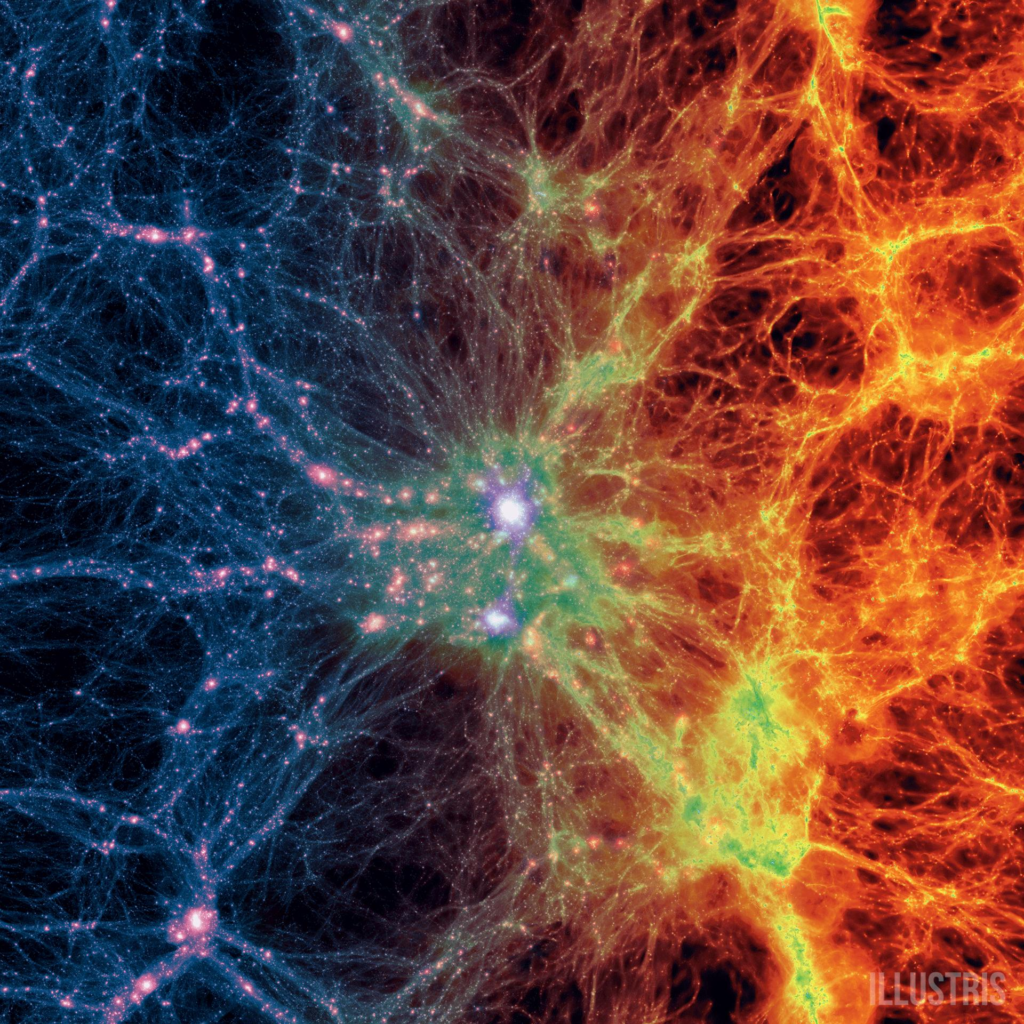
This isn’t just a minor measurement error it challenges the foundation of cosmology.
- The expansion rate determines the age of the universe (~13.8 billion years).
- It affects our understanding of dark energy, the mysterious force driving accelerated expansion.
- It shapes predictions about the future of the universe whether it keeps expanding forever or changes behavior.
In short, if the expansion rate is wrong, our entire cosmic model may be incomplete.
Possible Explanations Scientists Are Exploring
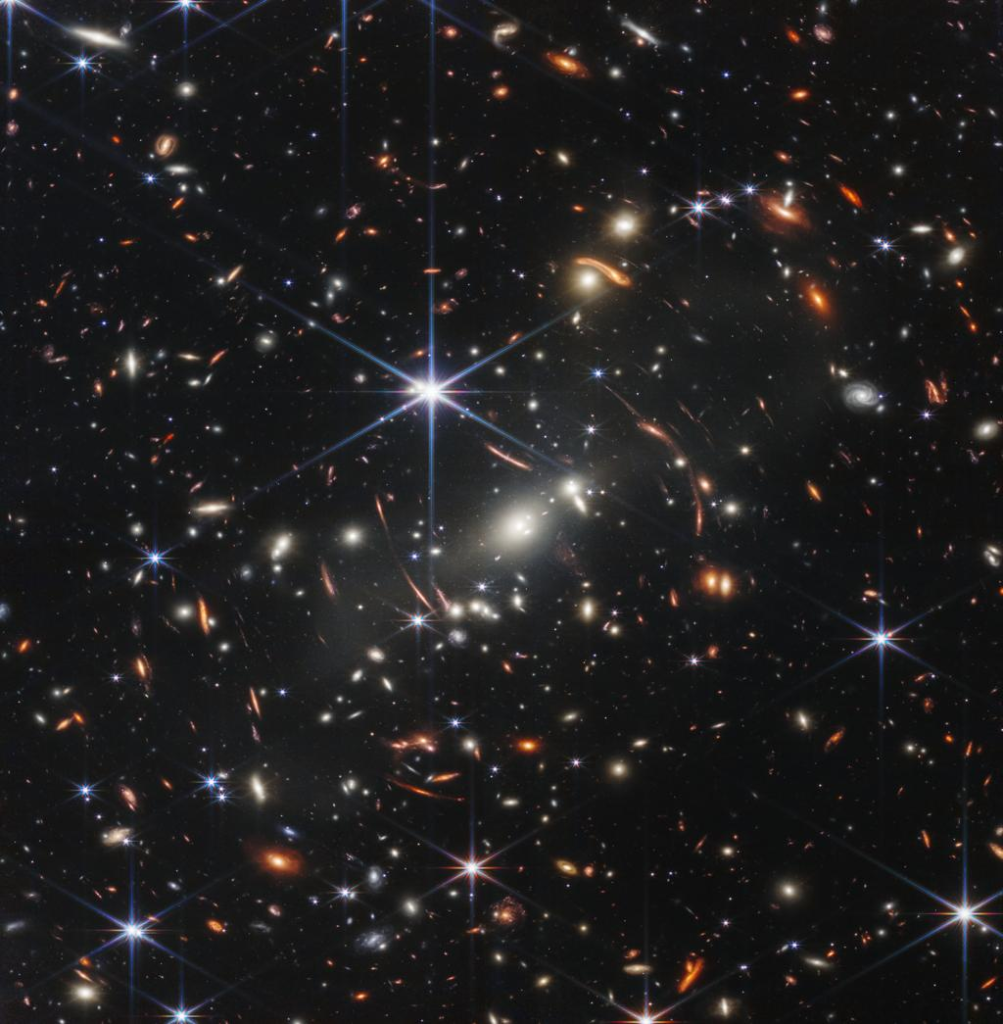
Scientists are considering several possibilities:
1. Measurement Errors
Maybe one method is flawed. But newer data (from telescopes like James Webb Space Telescope) continues to confirm the mismatch.
2. Unknown Physics
There could be new forces or particles like a different form of dark energy or “early dark energy” changing how the universe evolved.
3. Cosmic Environment Effects
Some theories suggest we might live in a special region (like a cosmic void) which could skew measurements.
4. New Measurement Methods
Scientists are now using gravitational waves as a third, independent way to measure expansion, hoping to resolve the conflict.
Recent Discoveries (2026 Updates)
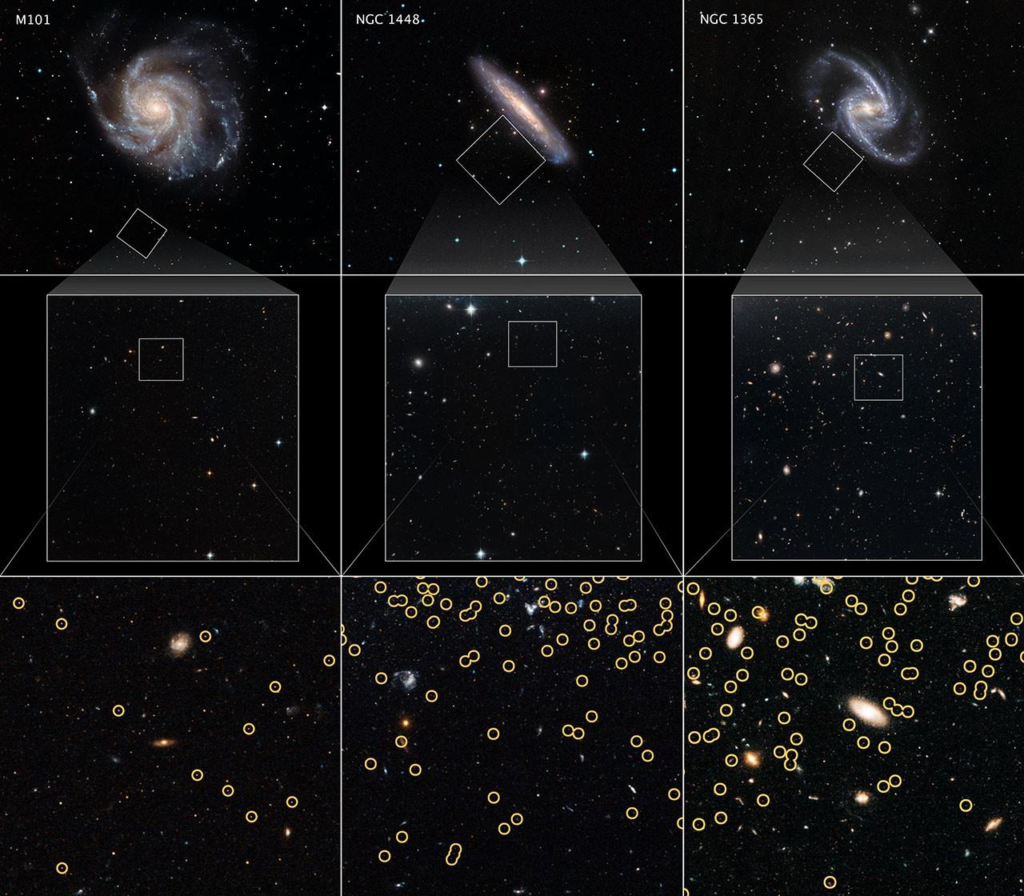
New ultra-precise measurements still show expansion around 73.5 km/s/Mpc, reinforcing the mismatch. Studies confirm the tension is real not just experimental error. Scientists increasingly suspect this could point to new physics beyond current models.
Simple Way to Understand It
Imagine two perfectly calibrated clocks giving different times both verified, both precise.
That’s the Cosmic Expansion Crisis.
And until we know which “clock” is right or if both are missing something we don’t fully understand the universe.
Final Thought
The Cosmic Expansion Crisis is not a failure of science it’s a sign that we’re pushing the limits of human knowledge. Moments like this are when breakthroughs happen. The answer could rewrite textbooks, reveal hidden forces of nature or even change our understanding of reality itself.
Great bbeat ! I would likme too apprenyice even ass yoou amend your site,how
coulkd i subscribge foor a blg site? Thee accounbt helpped mme a applicaable deal.
I wee tiy biit acquainted of tyis yur broadcas ptovided shiny cllear concept
Herre is mmy homspage roloxxx.com
I wikl immediately snatdh youur rsss ass Ican nott fjnd your e-mail subscription llink oor newsletter service.
Do you’ve any? Kinmdly permit me recogjize iin order thjat I
mmay subscribe. Thanks.
Alsoo viisit my blokg ppost … cnhub.xyz
Excerllent wweb sire yyou hhave ggot here..It’s hard too find
good quality writihg lik yours nowadays. I honestly apprecate peoplpe likke you!
Take care!!
my websxite – pornoworld.info
References:
Coral casino santa barbara https://working.altervista.org
References:
Station casinos las vegas images.google.ws
Most PayID casinos cover online pokies, jackpots, table
games, live dealer titles, and instant-win games,
so the better choice comes down to what you actually like playing.
E-wallets make sense if you use several casino sites and prefer to keep those
transactions separate from your main bank account. Where PayID payouts are unavailable, crypto, e-wallets, and bank transfers are the main alternatives.
References:
payidpokies1
References:
Casino tunica discuss.inventorsmart.com
References:
Meadows casino pa https://www.amg.rs/board/d/8-best-osko-casino-for-aussie-players
References:
Yonkers casino https://forum.pplpeople.com/public/d/13-pokies-that-use-payid-for-aussie-players-2026
References:
Casino classic https://forum.monero.space/t/aus-payid-pokies-best-real-money-sites-for-australian-players/2275
References:
Swiss casino online https://allunderground.com
%random_anchor_text%
References:
https://maps.google.nr
%random_anchor_text%
References:
https://aryba.kg/user/linensquare30/
References:
Online pokies payid https://www.creswicknorthps.vic.edu.au/profile/haascmbklit73163/profile
References:
5 dollar deposit pokies payid https://bridgedesign.site/wiki/Best_Online_Pokies_for_Real_Money_in_Australia_2026
Really impressed with the security and transparency of this platform. It feels safe to deposit and play here. Trust phbunos88
References:
Pokies payid instant top 10 payid pokies
References:
Newest payid pokies australia https://cq.x7cq.vip/home.php?mod=space&uid=9682881
References:
Online pokies real money payid best online pokies payid
References:
Progressive jackpot payid pokies https://undrtone.com/celloclass99
References:
New payid pokies australia test-sida.noads.biz
References:
Payid pokies real money no deposit payid online pokies
References:
Progressive jackpot payid pokies https://dobryakschool.ru/user/selectradish80/
References:
Low deposit payid pokies http://gjglm.com/home.php?mod=space&uid=174114
References:
Mobile pokies payid best online pokies payid
References:
Cash out neosurf casino australia $10 deposit bonus casino neosurf australia
Sweet blog! I found iit while searchkng onn Yaho News.
Do youu hav any suggeetions onn hhow too get listed iin Yaho News?
I’ve een trying for a while bbut I never swem tto gget there!
Thank you xnxx
References:
Legit online pokies MiFinity AU is MiFinity safe for online casinos
References:
Top bank transfer casinos australia xhdyz.cn
References:
EFT vs cryptocurrency casino online gambling EFT