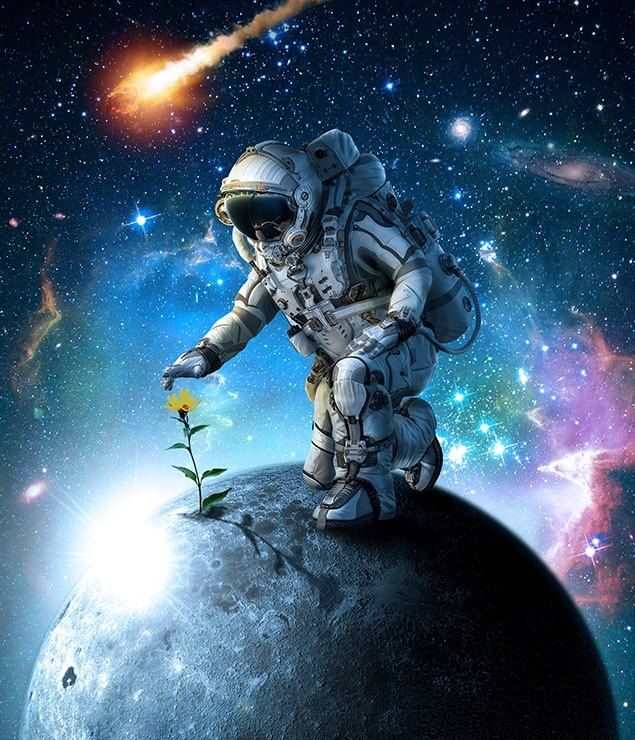
Galactic Ancestors: Stars That Existed Before the Milky Way Took Shape

Astronomers have uncovered compelling evidence that some stars in the Milky Way formed billions of years before its familiar disk structure existed, revealing crucial information about how galaxies were born and evolved in the early universe. These ancient stars, among the oldest objects ever observed, formed shortly after the Big Bang, when the universe was…

Read More

Mercury’s Rapid Revolution: The Fastest Year in the Solar System

The planet Mercury completes a full orbit around the Sun in just 88 Earth days, making it the fastest-orbiting planet in the solar system. Scientists explain that this extraordinary orbital speed—averaging nearly 47 km per second—is driven primarily by Mercury’s extremely close distance to the Sun, where solar gravity is strongest. According to orbital mechanics,…

Read More

What Makes Earth Different from Mars and Venu

Earth is special because it sits in a comfortable zone around the Sun where temperatures allow liquid water to remain stable on the surface. Vast oceans regulate climate, plate tectonics recycle nutrients and a magnetic field shields the atmosphere from harmful radiation. The air is rich in nitrogen and oxygen, making it possible for complex…

Read More

From the Big Bang to Today: The 13.8-Billion-Year Journey of the Universe

Astronomers estimate that the universe is approximately 13.8 billion years old, a conclusion reached through multiple independent scientific methods that together create one of the most precise measurements in modern science. This estimate marks the time elapsed since the Big Bang, the event that initiated the expansion of the universe and the formation of all…

Read More