
Total Lunar Eclipse – “Blood Moon” (March 3)
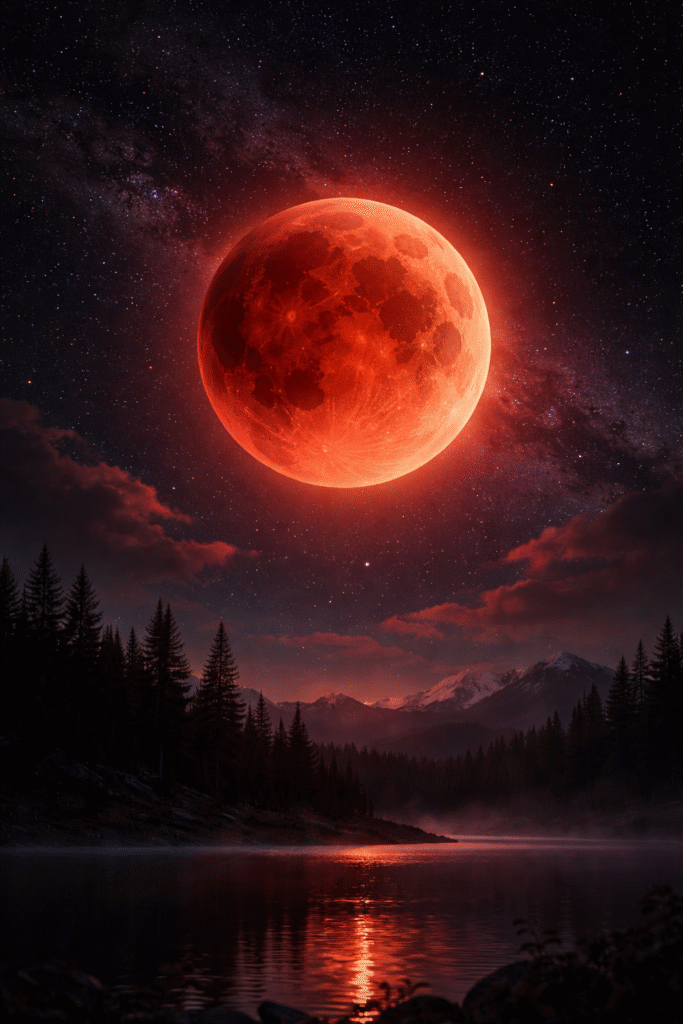
Total Lunar Eclipse – “Blood Moon”
A Total Lunar Eclipse happens when the Earth moves directly between the Sun and the Moon, casting its full shadow on the Moon. During totality, the Moon turns a deep reddish color this is why it’s often called a “Blood Moon.”
Why Does the Moon Turn Red
Even though Earth blocks direct sunlight, some sunlight still reaches the Moon. Here’s how:
- Sunlight passes through Earth’s atmosphere
- The atmosphere scatters shorter blue wavelengths
- Longer red/orange wavelengths bend around Earth
- That filtered red light illuminates the Moon
This is the same reason sunsets appear red. During totality, the Moon glows in shades ranging from copper to deep crimson.
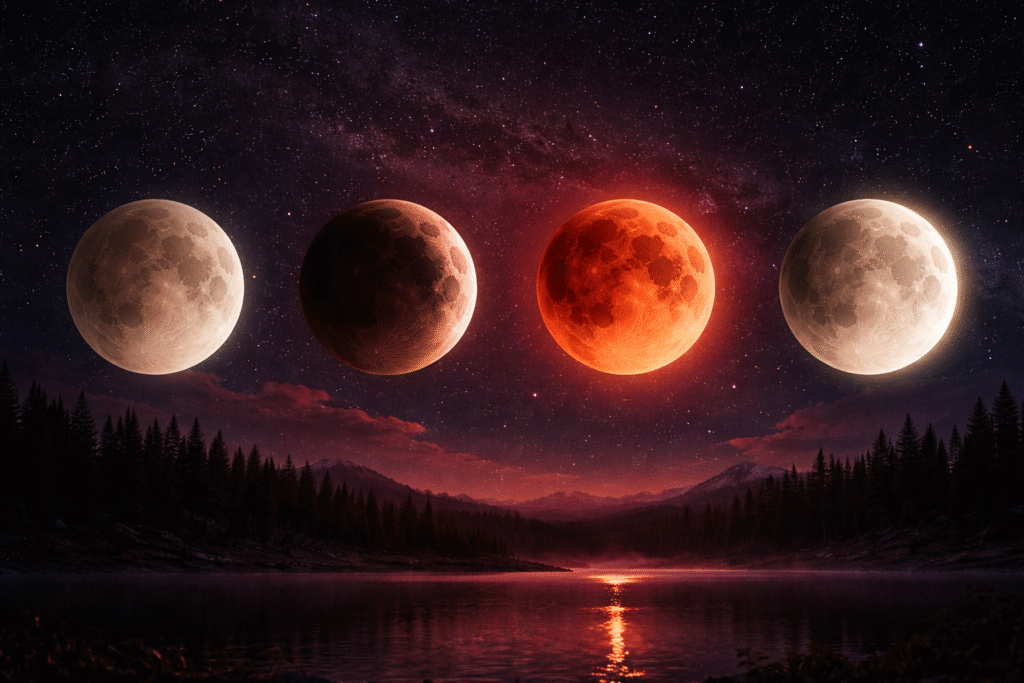
The Four Main Stages of a Total Lunar Eclipse
- Penumbral Eclipse Begins
The Moon enters Earth’s outer shadow (slight dimming). - Partial Eclipse Begins
Earth’s darker central shadow (umbra) starts covering the Moon. - Totality (Blood Moon Phase)
The entire Moon is inside Earth’s umbra and appears red. - Eclipse Ends
The Moon gradually exits the shadow and returns to normal brightness.
How Long Does It Last
- Entire event : About 4–6 hours
- Totality (red phase) : Typically 30–90 minutes
Who Can See It
A total lunar eclipse is visible from the entire night side of Earth. Unlike solar eclipses, you don’t need special equipment to watch it safely.
Safety & Viewing Tips
✔ No eye protection required.
✔ Best viewed away from city lights.
✔ Binoculars enhance detail.
✔ A tripod helps with photography.
Interesting Facts
- Ancient civilizations saw Blood Moons as omens.
- The exact shade of red depends on atmospheric conditions (dust, pollution, volcanic ash).
- Some eclipses are darker than others scientists measure this using the Danjon Scale.