

The Universe’s Masterpiece: Unveiling the Sunflower Galaxy (Messier 63)
Hey there, astrodrive.fun readers and galaxy enthusiasts!
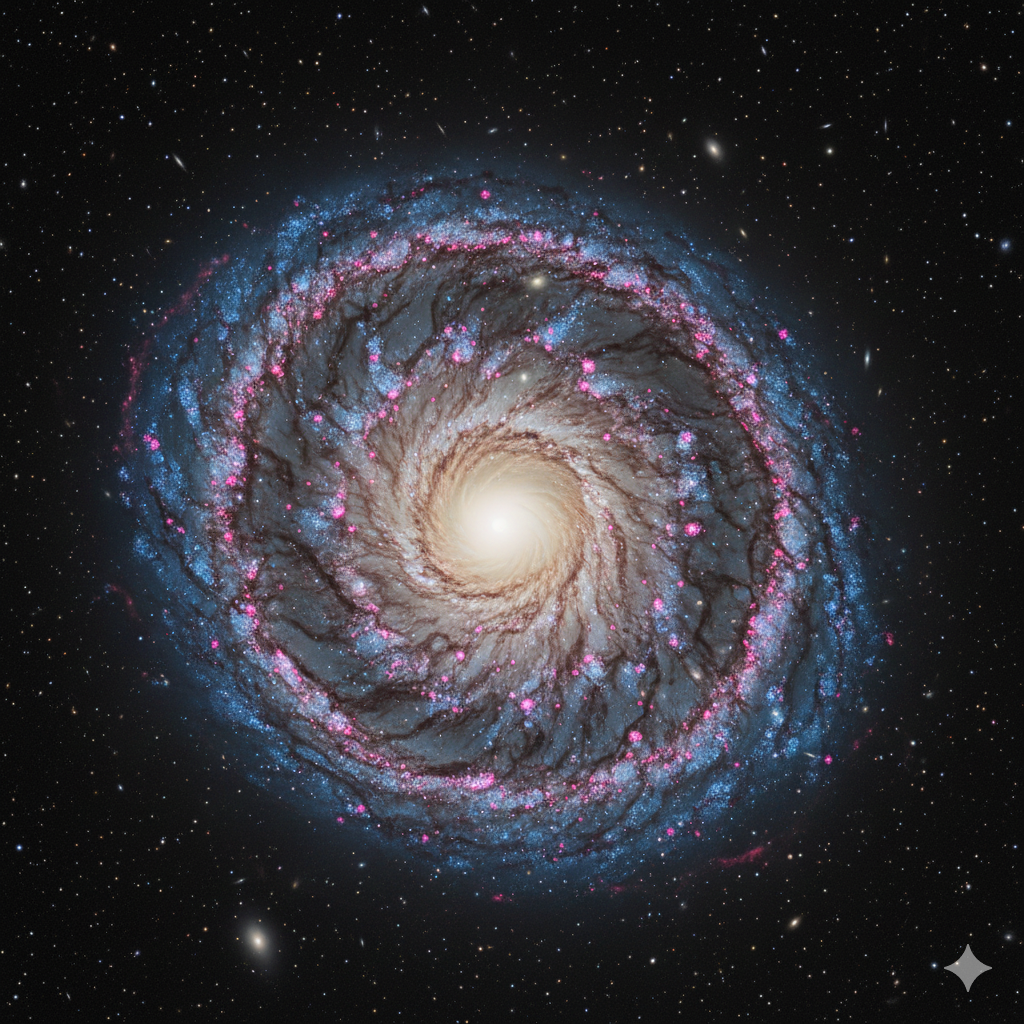
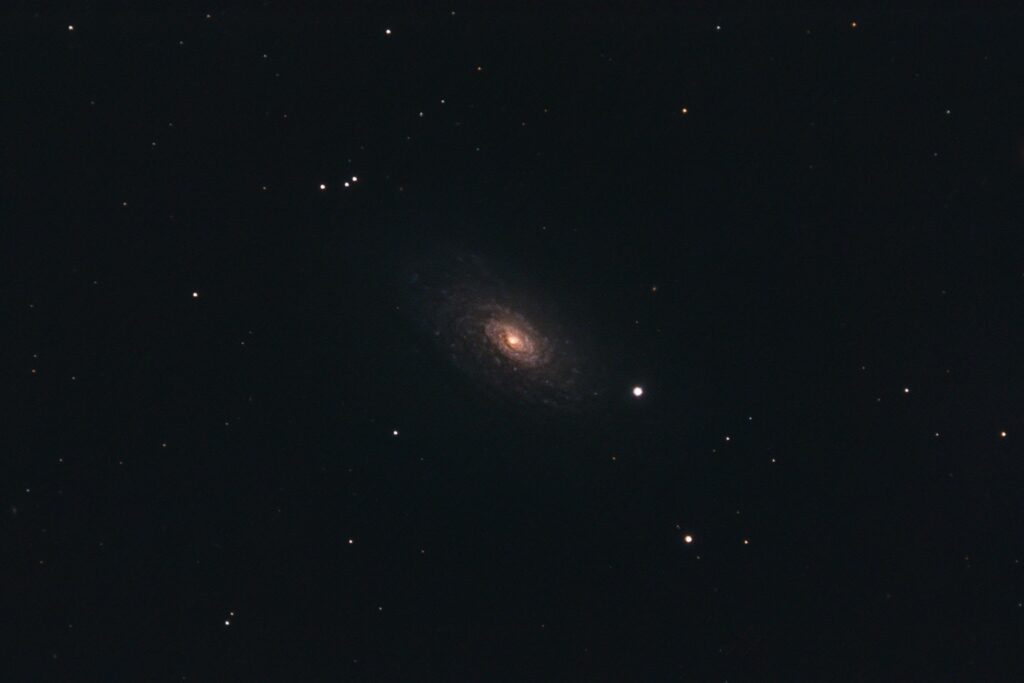
Prepare to be captivated by one of the cosmos’s most exquisite creations: the Sunflower Galaxy (Messier 63, or M63). This celestial wonder, residing about 27 million light-years away in the constellation Canes Venatici, is a true testament to the universe’s artistry.
Its name, “Sunflower Galaxy,” isn’t just a poetic whim—it’s a perfect description. M63’s beautifully intricate spiral arms spread outwards, mimicking the delicate, swirling patterns of a sunflower’s seeds. It’s a breathtaking sight in the vast, dark canvas of space!
A Swirling Tapestry of Stars and Dust
The Sunflower Galaxy is classified as a flocculent spiral galaxy. Unlike “grand-design” spirals that have well-defined, sweeping arms, flocculent spirals like M63 feature a more fragmented, patchy appearance to their spiral structure. However, M63 manages to combine this patchiness with a striking, radiant symmetry that makes it truly stand out.
- Intricate Arms: Its numerous short spiral arm segments are tightly wound around a bright central core. These arms are packed with young, hot, blue stars, making them glow vibrantly.
- Dust Lanes: Dark lanes of dust and gas are interwoven within these arms, providing a dramatic contrast and highlighting the galaxy’s intricate structure. These dust lanes are where new stars are actively forming.
- Central Bulge: At its heart lies a luminous bulge of older, yellow-red stars, indicating a more mature population in the galaxy’s core.
Gravitational Dance: A Companion’s Influence?
M63 is part of the M51 Group of galaxies, which also includes the famous Whirlpool Galaxy (M51). While it’s not directly interacting with M51 in the same dramatic way M51 is with its companion, these galaxies are gravitationally bound. The influence of its neighbors within the group might contribute to the unique structure of the Sunflower Galaxy, perhaps helping to stir up gas and dust, triggering bursts of star formation in its arms.
Observing the Sunflower Galaxy
For amateur astronomers, the Sunflower Galaxy is a rewarding target. With a magnitude of about 9, it’s visible even with small telescopes, appearing as a faint, fuzzy patch. However, larger amateur telescopes (8 inches or more) under dark skies begin to reveal its delicate spiral structure, making it a favorite for many.
Key Observation Points:
- Constellation: Canes Venatici (The Hunting Dogs)
- Coordinates: RA 13h 15.8m, Dec +42° 02′
- Best Time to View: Spring, when Canes Venatici is high in the northern sky.
A Cosmic Reminder of Beauty
The Sunflower Galaxy is more than just a collection of billions of stars; it’s a magnificent reminder of the universe’s incredible capacity for beauty and complexity. Its spiraling arms are a testament to the elegant dance of gravity, gas, and starlight playing out across immense cosmic distances.
Looking at M63, you can almost feel the gentle rotation of its starry embrace, an exquisite cosmic flower blooming forever in the infinite garden of space.
What’s your favorite galaxy, and why does it captivate you? Share your thoughts in the comments!
Another easy 188bet login – dangnhap188bet makes life so much simpler. No more searching for the right link! Try it!. Directly accesses dangnhap188bet
I tried to find something intresting, Goperyalogin is not bad choice. Website is easy to see, and have many game. Try it here: goperyalogin
BingoPlus! Time to daub those numbers and yell ‘Bingo!’ If you’re looking for some fun bingo action then hit the bingoplust site, enjoy!
Just wanted to give a shoutout to phfierylogin. Super easy and quick login process. No hassles at all! Makes getting back to the games a breeze. If you’re having trouble finding it, here’s the link: phfierylogin
Hey, 6rbet1’s pretty solid! Found some interesting game offers and the user interface is pretty straightforward and easy to use. You can visit them through this link: 6rbet1
Been using ggwinbet for a while now. Solid place to bet, good odds and prompt payouts. Try this: ggwinbet
Who doesn’t love a good bonus? Checking out bonusdoh2bet to see what they’ve got. Get your bonus: bonusdoh2bet