

The Footprints That Last 100 Million Years: The Immortal Legacy of Apollo
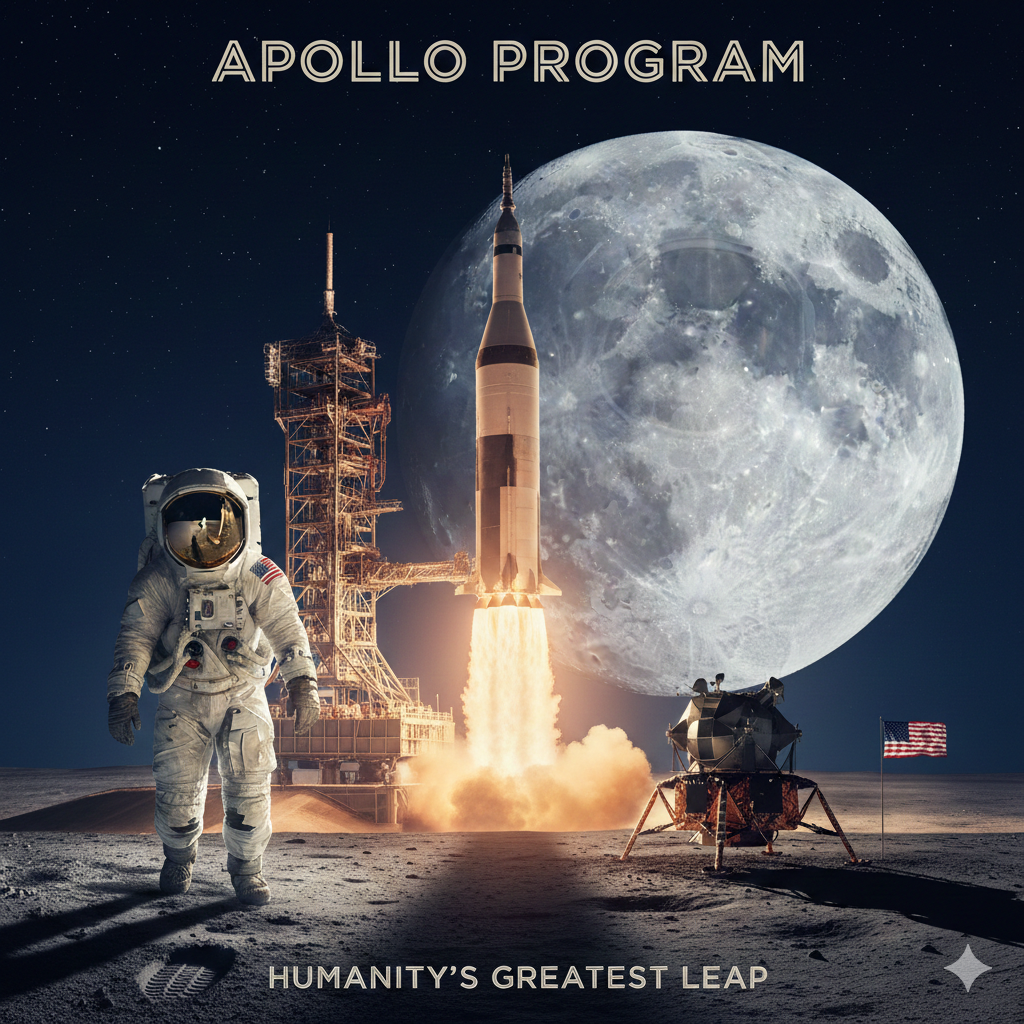
Why the Footprints Last So Long
The extraordinary longevity of these marks is due to the Moon’s unique environment:
- No Atmosphere or Weather: The most critical factor is the Moon’s lack of a substantial atmosphere. This means there is no wind or water to cause erosion, which are the main forces that wear away tracks and marks on Earth.
- No Geological Activity: Unlike Earth, the Moon is considered geologically inactive, meaning there are no tectonic shifts, volcanoes, or other significant movements that would reshape the surface and cover the prints.
- Stable Regolith: The lunar soil, called regolith, is a fine powder that, when compacted by a boot, holds its shape very well in the vacuum of space.
What Will Eventually Erase Them?
While they will last for a very long time, the footprints won’t remain forever. They are gradually being eroded by a very slow process:
- Micrometeorite Bombardment: The Moon is constantly being struck by tiny, high-speed space dust particles called micrometeorites. Over immense periods of time (millions of years), the cumulative effect of these tiny impacts will slowly stir up and wear down the lunar surface, eventually blurring and erasing the footprints.
- Solar Wind and Radiation: Exposure to the solar wind and cosmic radiation also contributes to minor surface degradation over eons.
This erosion is so slow that the prints are expected to be visible for at least 100 million years, a testament to humanity’s first steps on another celestial body.
Apollo missions
It was the U.S. human spaceflight program run by NASA, with the primary goal established by President John F. Kennedy in 1961: “landing a man on the Moon and returning him safely to the Earth” before the end of the decade.1
Key Milestones of the Apollo Program (1961–1972)
The program involved a series of missions, moving from uncrewed tests to full lunar landings.2
| Mission | Date | Primary Goal & Outcome | Significance |
| Apollo 1 | Jan 27, 1967 | Uncrewed launchpad test | A tragic fire killed the three-person crew on the launchpad, leading to major safety overhauls. |
| Apollo 7 | Oct 1968 | Crewed flight in Earth orbit | First crewed test of the updated Command and Service Module (CSM). |
| Apollo 8 | Dec 1968 | Crewed flight to the Moon | First humans to orbit the Moon and the first crewed flight of the powerful Saturn V rocket. |
| Apollo 10 | May 1969 | “Dress Rehearsal” | Crew flew the Lunar Module (LM) to within 9 miles (15 km) of the lunar surface before returning to the CSM. |
| Apollo 11 | Jul 1969 | First crewed lunar landing | Astronauts Neil Armstrong and Buzz Aldrin walked on the Moon. |
| Apollo 13 | Apr 1970 | Intended Lunar Landing | Mission aborted after an oxygen tank explosion in the Service Module. The crew returned safely using the Lunar Module as a “lifeboat.” |
| Apollo 15, 16, 17 | 1971–1972 | Extended Scientific Missions | Used the Lunar Roving Vehicle (Moon Buggy) for extensive geological exploration and collected hundreds of pounds of rock samples. Apollo 17 was the final mission. |
The Legacy of the Six Lunar Landings
A total of six missions successfully landed humans on the Moon (Apollo 11, 12, 14, 15, 16, and 17).3 In total, 12 astronauts have walked on the lunar surface.4
The program successfully returned 842 pounds (382 kg) of lunar rocks and soil to Earth, providing invaluable data that scientists still study today to understand the Moon’s origin and geological history.5
Heard about 9rbettelegram through a buddy. Using Telegram for updates and deals? Smart move. Makes it super easy to stay in the loop. Worth joining: 9rbettelegram
Eh, ok93…It’s alright, I guess. Nothing really stood out, but also nothing particularly *bad*. Perfectly average, you know? If you’re bored, give ok93 a try, maybe you’ll have better luck than me.
6ffwin, huh? The name’s catchy. Hope the winning streaks are too! Gonna give it a shot and see if I can hit the jackpot. Good luck to me! 6ffwin here I come!
VV88VIP, heard some whispers about ya. Need a reliable spot to throw down some bets. A clean interface is a must for me. Hope the customer service isn’t a headache either. Let’s see if vv88vip lives up to the hype!
Been messing around on a5game lately. It’s got a few interesting things going on. Could be a good shout if you’re looking for something new a5game.
Heard about is747livesafe being a secure option, and so far, so good. Feels legit and responsible, which is a big deal for me. Check it out if that’s your vibe too: is747livesafe
188V – Trang Chủ Chính Thức Nhà Cái 188BET cam kết không bán dữ liệu khách hàng – thông tin cá nhân được mã hóa tuyệt đối và chỉ dùng để xác minh giao dịch. TONY02-25O