
How the Sun and Moon Control Life Cycles on Earth
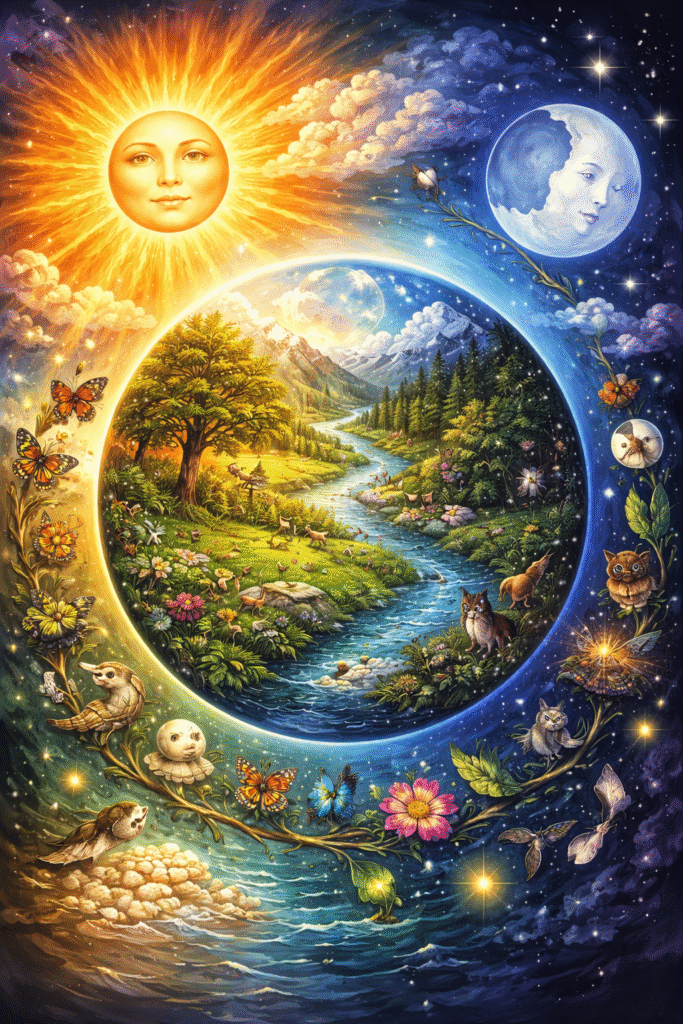
Sun as the Source of Life
The Sun provides the energy that makes life on Earth possible. Its light drives photosynthesis allowing plants to produce food and oxygen which supports almost all living organisms.
Day and Night Cycle
The rotation of Earth under the Sun creates day and night. This cycle controls sleeping, feeding and activity patterns in humans, animals and plants.
Biological Clocks (Circadian Rhythms)
Sunlight regulates circadian rhythms in living beings. These internal clocks control sleep, hormone release, body temperature and alertness.
Seasons and Growth Cycles
The Sun’s position changes throughout the year, creating seasons. Seasonal sunlight affects plant flowering, crop cycles, animal migration and breeding periods.
Climate and Weather Influence
Solar energy drives wind, rain and ocean currents. These climate patterns shape ecosystems and determine where different species can survive.
Moon and Ocean Tides
The Moon’s gravity causes ocean tides. Tides influence coastal ecosystems, nutrient movement and marine life behavior.
Marine Life Cycles
Many sea creatures time their feeding, migration and reproduction with lunar cycles and tidal changes.
Nocturnal and Lunar Behavior
Moonlight affects nighttime animals. Some species hunt, mate or move based on the Moon’s brightness and phases.
Monthly Rhythms
The Moon’s phases create monthly cycles that influence biological and environmental patterns especially in aquatic and nocturnal species.
Balance Between Sun and Moon
Together, the Sun and Moon create stable, predictable rhythms. Life on Earth has evolved to depend on these cycles for survival and balance.
Yo, 090betvip, trying my luck here. Hoping for some good odds and a smooth experience. VIP treatment, let’s see if it lives up to the name! 090betvip
The bigger picture …………….great article !