

Galaxies: Cities of StarsGalaxies: Cities of Stars
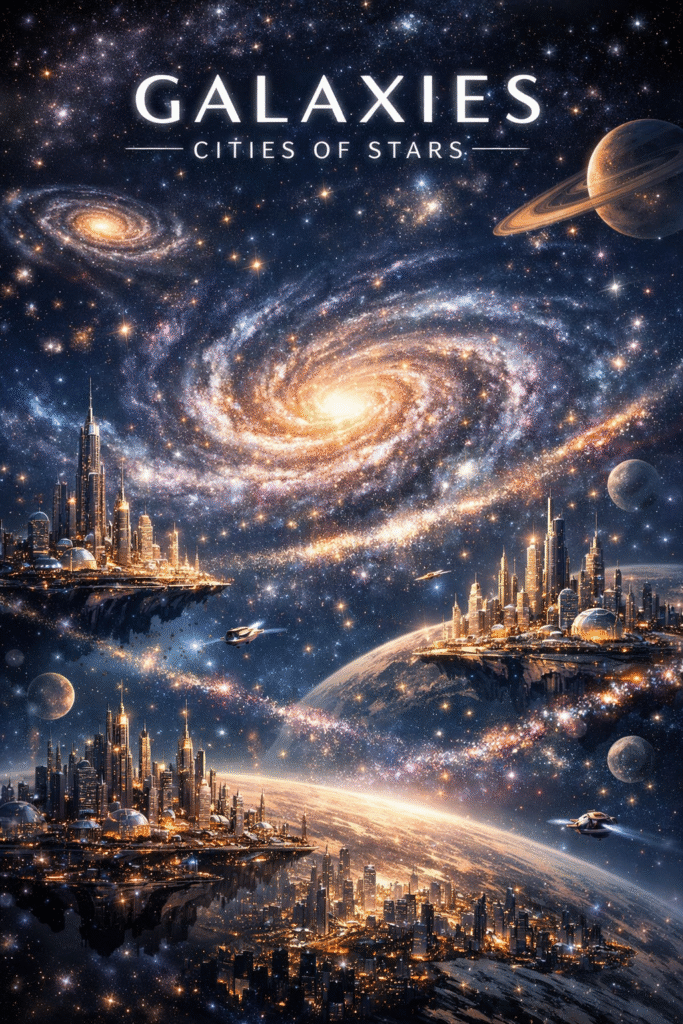
When people describe galaxies as cities of stars, they are trying to make something unimaginably vast feel familiar. Just as a city gathers millions or billions of people bound by gravity, culture and history, a galaxy gathers enormous numbers of suns, planets, gas, dust and dark matter into one grand, evolving system. Thinking this way helps you picture structure, neighborhoods and motion instead of a random spray of lights.
A galaxy is a gravitationally bound island in space. Inside it, stars orbit a common center, often taking hundreds of millions of years to complete a single trip. Between those stars lies interstellar gas and dust the raw material for future generations of suns and planetary systems. Invisible dark matter forms an even larger halo, providing most of the mass that keeps everything held together.
These stellar cities come in different shapes. Spiral systems such as Milky Way, have rotating disks with sweeping arms where new stars are frequently born. Elliptical ones look more like glowing footballs and tend to contain older stellar populations. Irregular galaxies are the wild cards, often distorted by past encounters or mergers with neighbors.
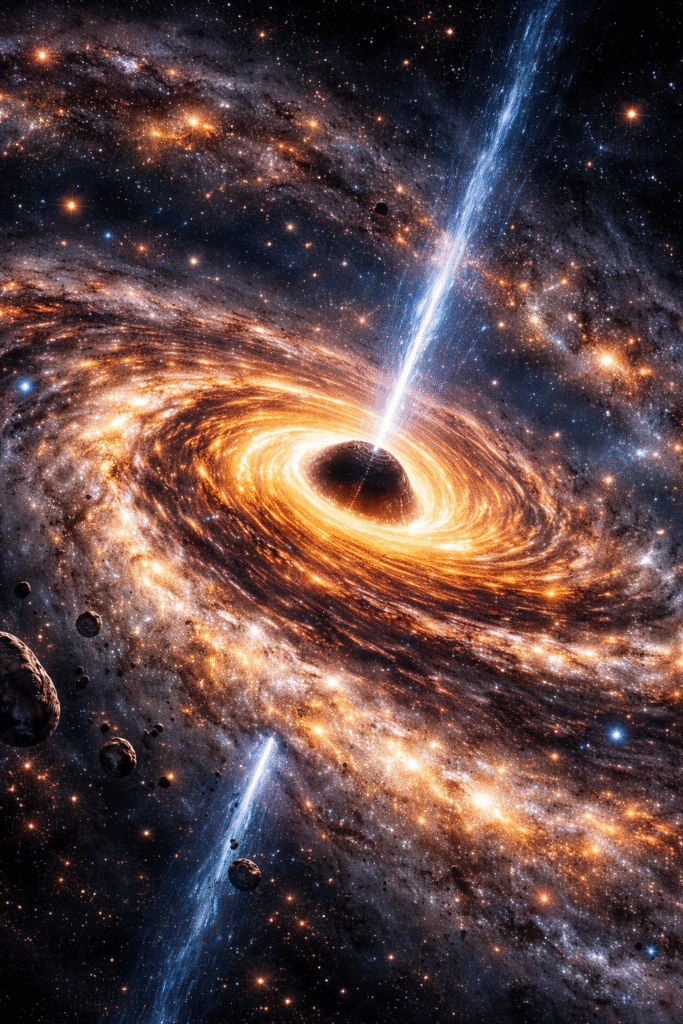
At the heart of nearly every large galaxy sits a supermassive black hole. In our own, that object is called Sagittarius A*. It does not “eat” the whole galaxy but its gravity influences the inner region and when material falls toward it, enormous energy can be released, sometimes outshining all the stars combined.
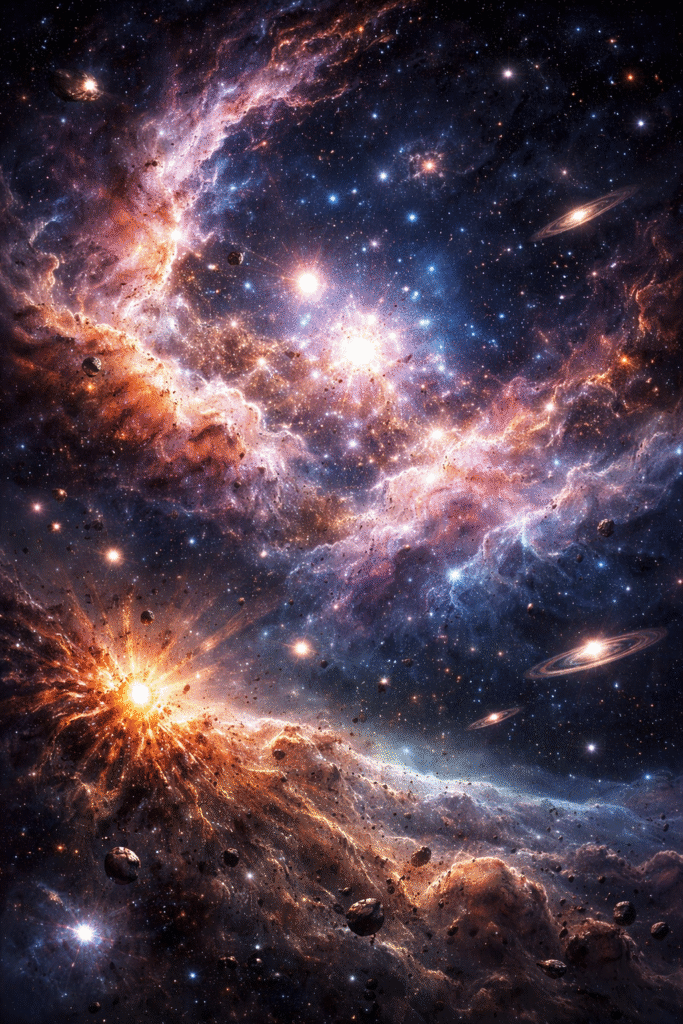
If galaxies are cities, then nebulae are like construction zones. Clouds collapse under gravity, fragment and ignite nuclear fusion, giving birth to new stars. Over time, massive stars explode as supernovae, enriching the surroundings with heavier elements that later become planets, oceans and eventually living organisms.
On the largest scales, galaxies gather into clusters and filaments, creating a cosmic web. Immense voids lie between these threads, making the universe resemble a network of glowing metropolises separated by vast dark countryside.
This perspective carries an important lesson. Every star you see at night is part of a much bigger community and our solar system occupies just one tiny address within it. Understanding that scale encourages patience, curiosity and humility qualities that drive real discovery.
If you want to explore further, the next step is to learn how astronomers map these structures, measure distances and decode light to reveal motion and composition. Mastering those tools turns poetic imagery into scientific insight, letting you read the architecture of the universe with confidence.
References:
How long does it take to get big on steroids
References:
https://md.un-hack-bar.de/s/VbDVxzlEpv
References:
Anabolic androgenic
References:
https://sommer-architekt-warstein.de/VPB-Expertenrat;focus=TKOMSI_com_cm4all_wdn_Flatpress_22800952&path=?x=entry:entry230621-164837%3Bcomments:1
References:
Best steroid cycle for beginner
References:
https://www.sperbys-musikplantage.de/index.php/;focus=STRATP_com_cm4all_wdn_Flatpress_21123190&path=&frame=STRATP_com_cm4all_wdn_Flatpress_21123190?x=entry:entry210617-103820%3Bcomments:1
References:
Chinook winds casino
References:
https://pad.stuve.de/s/6ob4CgKJ4
References:
Hollywood casino cincinnati
References:
https://bookmark4you.win/story.php?title=winspirit-casino-best-slots-high-rtp-pokies
References:
Testosteronspiegel erhöhen Tabletten
References:
https://pad.geolab.space/s/boODmcoLK
References:
Testosteron Tabletten rezeptfrei
References:
https://pads.jeito.nl/s/MKIMPy74aY