

Could the Moon Become a Space Station for Mars Travel
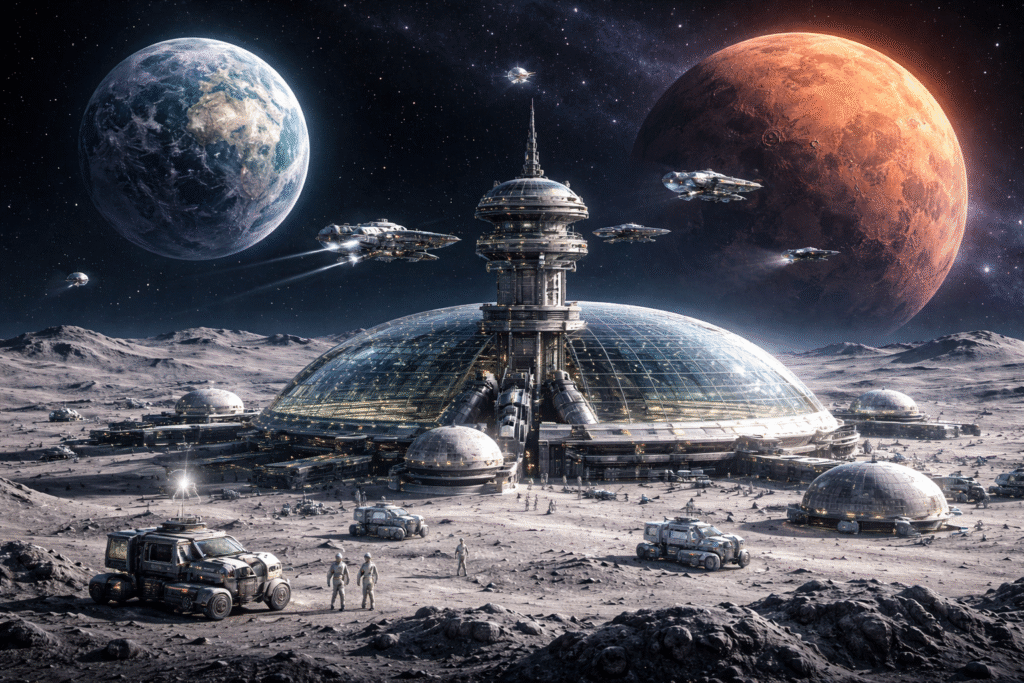
The idea of using the Moon as a departure hub for missions deeper into the Solar System comes up often in long-term exploration planning. Because it is much smaller than Earth, escaping its gravity requires far less energy. Launching a spacecraft from there could mean carrying less fuel which leaves more room for supplies, cargo or scientific equipment. That efficiency is one of the biggest reasons engineers keep studying the concept.
Another advantage is proximity. The Moon sits only a few days away from Earth, close enough for relatively quick communication and resupply yet far enough to test the technologies needed for multi-year journeys. Life-support systems, radiation shielding and surface operations could be refined in a place where help is not impossibly distant. Lessons learned there would shape how future crews prepare for the long voyage toward Mars.
Resources might also play a crucial role. Water ice identified in permanently shadowed craters could be turned into drinking water, breathable oxygen and even rocket propellant. If those materials can be harvested reliably, explorers would not need to launch everything from Earth. Producing fuel locally would transform the Moon from a simple stopover into an active logistics center.
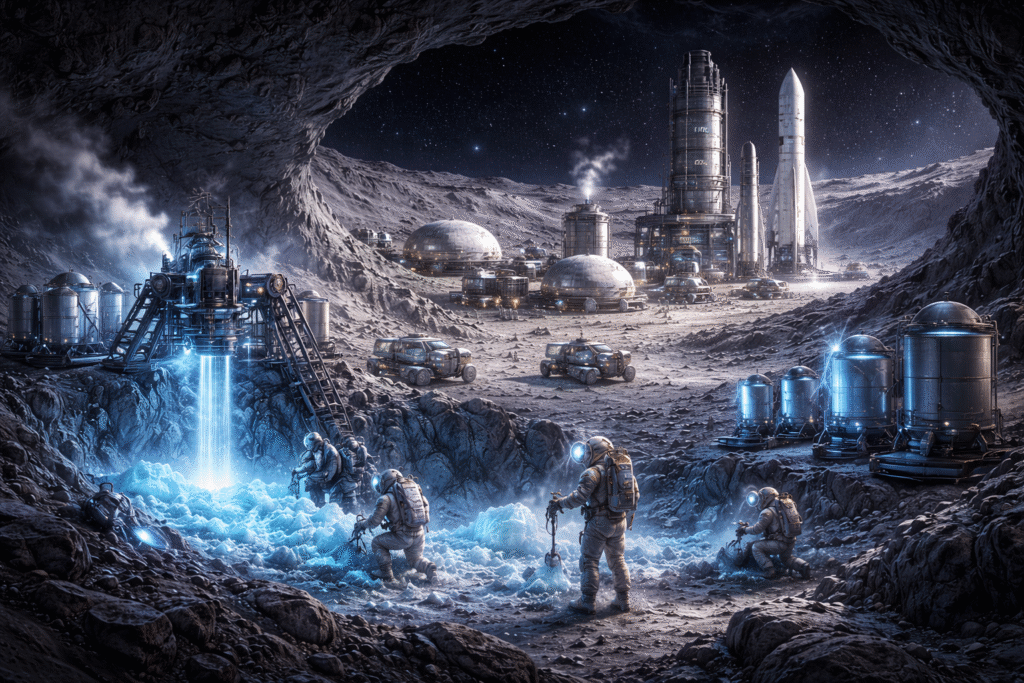
Building and maintaining infrastructure would be a massive challenge. Habitats must protect crews from radiation, micrometeorites and extreme temperature swings. Power generation likely through solar arrays or nuclear systems must be dependable. Transporting construction materials from Earth is expensive so researchers are exploring ways to use lunar soil for building landing pads, shelters, and roads.
Human health is another open question. Living in low gravity for months could affect muscles, bones and overall physiology. A lunar outpost would become a natural laboratory to understand these effects and develop countermeasures before astronauts commit to the much longer transit to Mars.
If the concept succeeds, the Moon would evolve from a destination into a gateway. Spacecraft might assemble there, refuel and depart during optimal launch windows creating a steady rhythm of travel outward. What begins as a testing ground could ultimately become humanity’s first true interplanetary port.