Hammad Shahzad

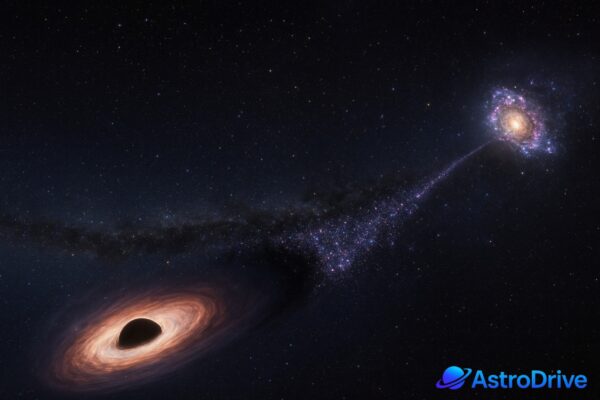
When a Galaxy Loses Its Black Hole: The First Confirmed Runaway Supermassive Black Hole

Supermassive black holes usually sit motionless at the centers of galaxies, acting as gravitational anchors. With masses reaching hundreds of millions or even billions of Suns, they shape the evolution of entire galaxies. For decades, astronomers predicted that under extreme conditions, even these giants could be expelled from their homes. Until recently, this idea remained…
Read More

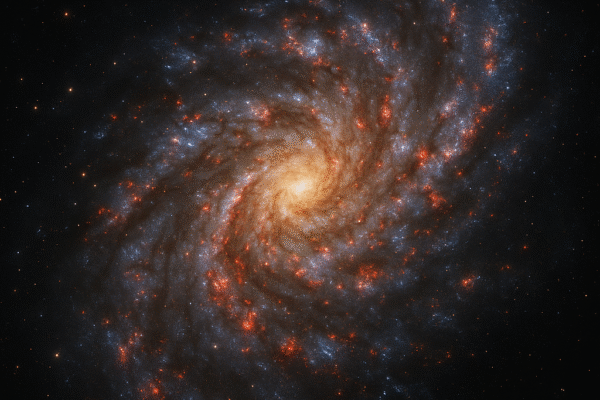
A Starburst Symphony: The Majestic Spiral Galaxy NGC 1792

This stunning image, captured by the NASA/ESA Hubble Space Telescope, unveils the dramatic beauty of the spiral galaxy NGC 1792. Located over 50 million light-years away in the southern constellation Columba (the Dove), NGC 1792 is far from a tranquil celestial object. Its bright, shimmering central glow is encircled by sprawling, flocculent spiral arms that…

Read More

Science in Microgravity: Expedition 73 Research and Crew Operations on the ISS

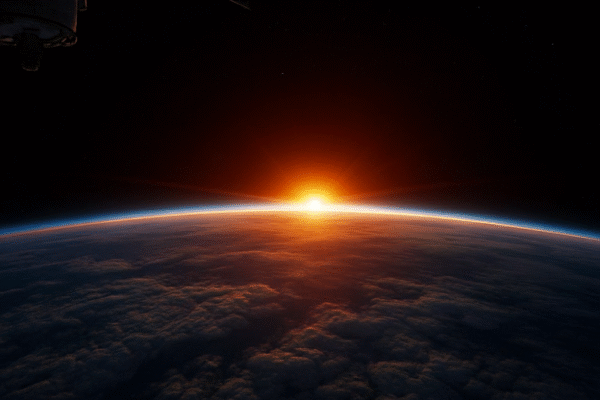
Orbital Research and Crew Operations Aboard the International Space Station An orbital sunrise illuminated Earth’s atmosphere and cloud tops in a photograph captured from the International Space Station as it orbited approximately 264 miles above the Czech Republic in Eastern Europe NASA Flight Engineer Zena Cardman dedicated her day to human research activities, including blood…

Read More

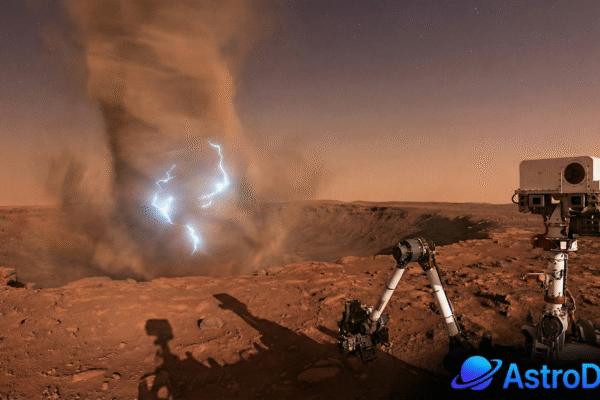
Sparks on the Red Planet: Perseverance Rover Confirms Martian Dust Devils are Electric

NASA’s Perseverance rover has just confirmed something scientists have suspected for decades: The “Dust Devils” of Mars aren’t just swirling wind—they are crackling with electricity.​ For the first time in history, audio recordings from the Red Planet have captured the sounds of electrical discharges (sparks) and mini-sonic booms coming from these Martian twisters. This discovery,…

Read More