
Aurora Borealis (Solar activity dependent)
Hello space voyagers!
Today, we’re setting off on an exciting journey through our cosmic neighborhood the Solar System. From the blazing heat of the innermost worlds to the frozen giants drifting in the outer darkness, each planet has its own story waiting to be uncovered. Along the way, we’ll also dive into fascinating discoveries from planetary surfaces including what scientists are learning from soil samples on Mars and our Moon.
Buckle up this is going to be a fast-paced adventure across space!
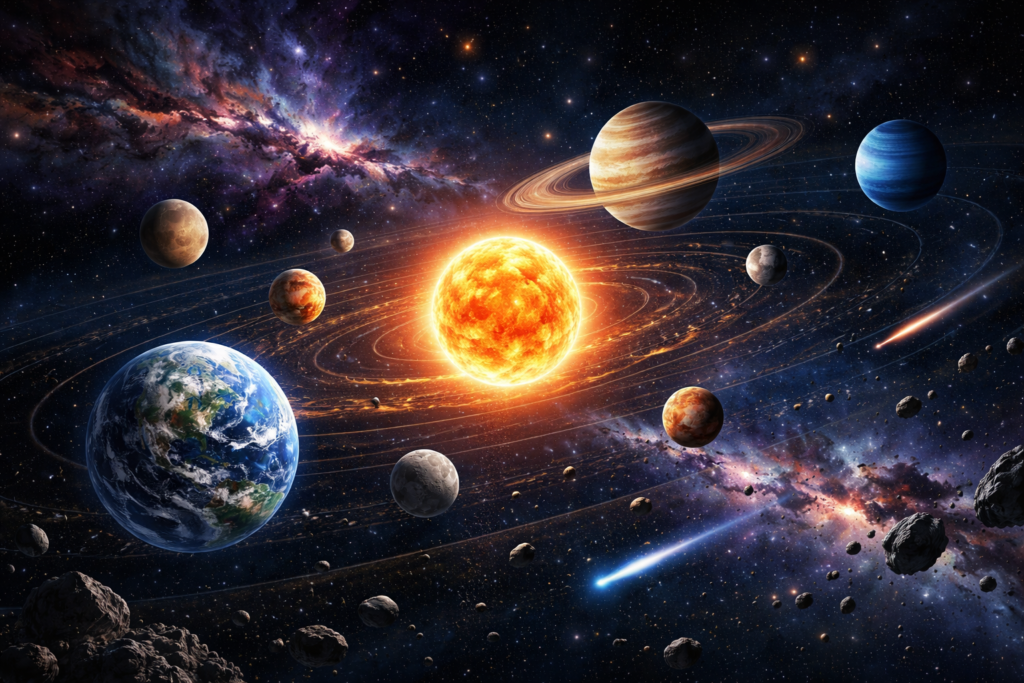
The Solar System is a vast and dynamic neighborhood centered around the Sun. Formed about 4.6 billion years ago from a collapsing cloud of gas and dust, it includes eight planets, their moons, dwarf planets, asteroids and comets. The Sun contains more than 99% of the system’s mass and its gravity keeps everything in motion, shaping the orbits and environments of all surrounding bodies.
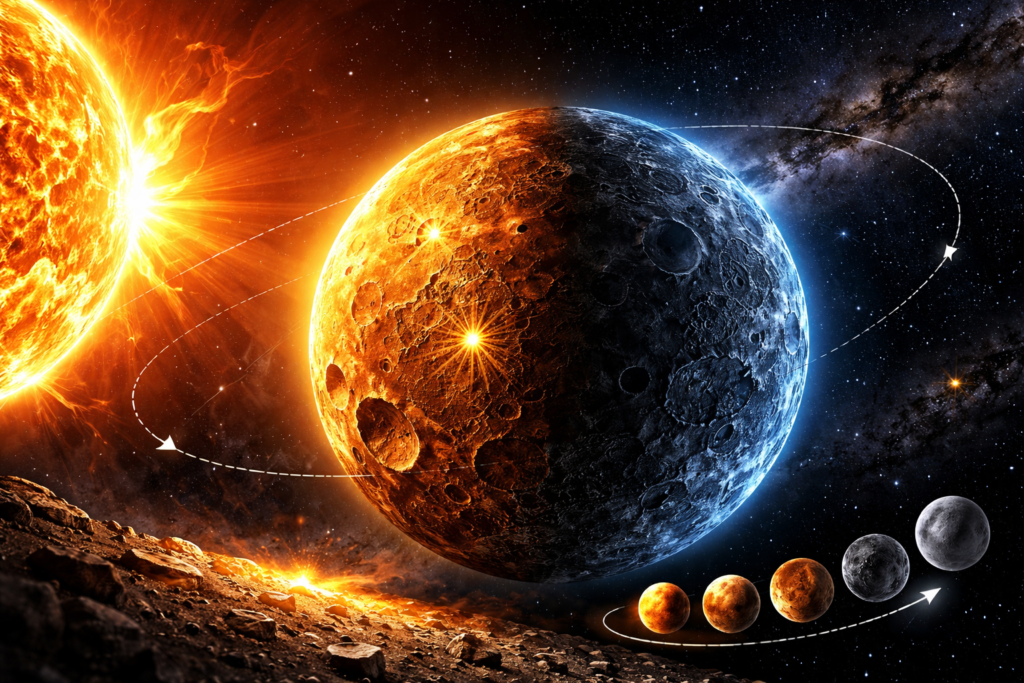
Closest to the Sun is Mercury, a small, rocky world with extreme temperature swings from scorching heat during the day to freezing cold at night. It has almost no atmosphere which means it cannot trap heat. Its surface is heavily cratered, resembling Earth’s Moon and it completes an orbit around the Sun in just 88 Earth days.
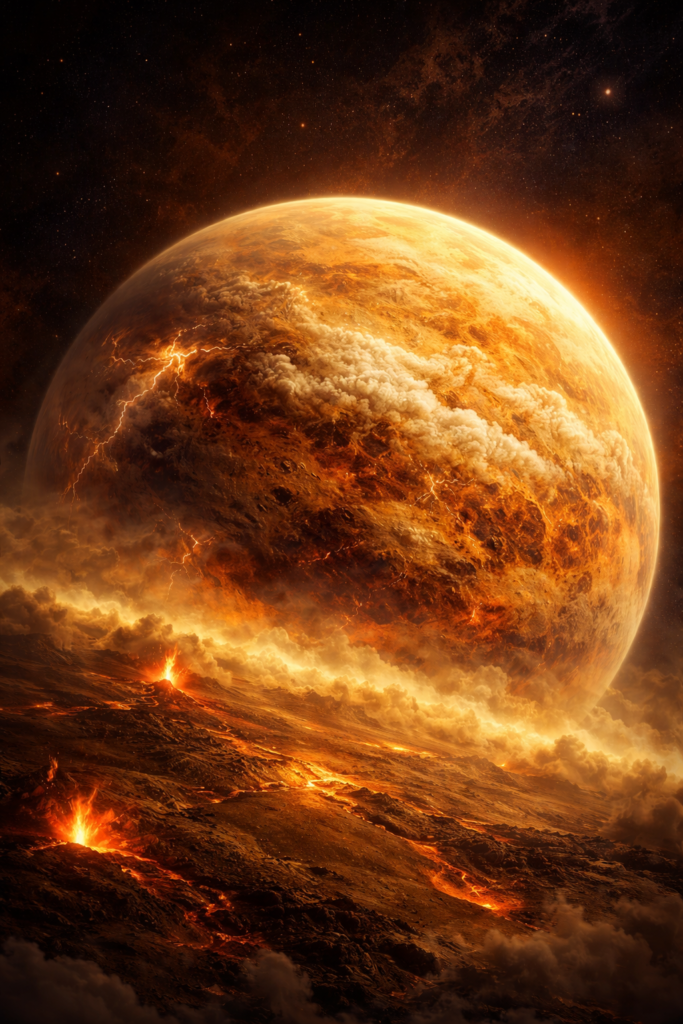
Next comes Venus, often called Earth’s twin due to its similar size. However, its environment is drastically different. Venus has a thick atmosphere made mostly of carbon dioxide, creating an intense greenhouse effect that makes it the hottest planet in the Solar System even hotter than Mercury. Its surface is covered with volcanic plains and mountains, hidden beneath dense clouds of sulfuric acid.
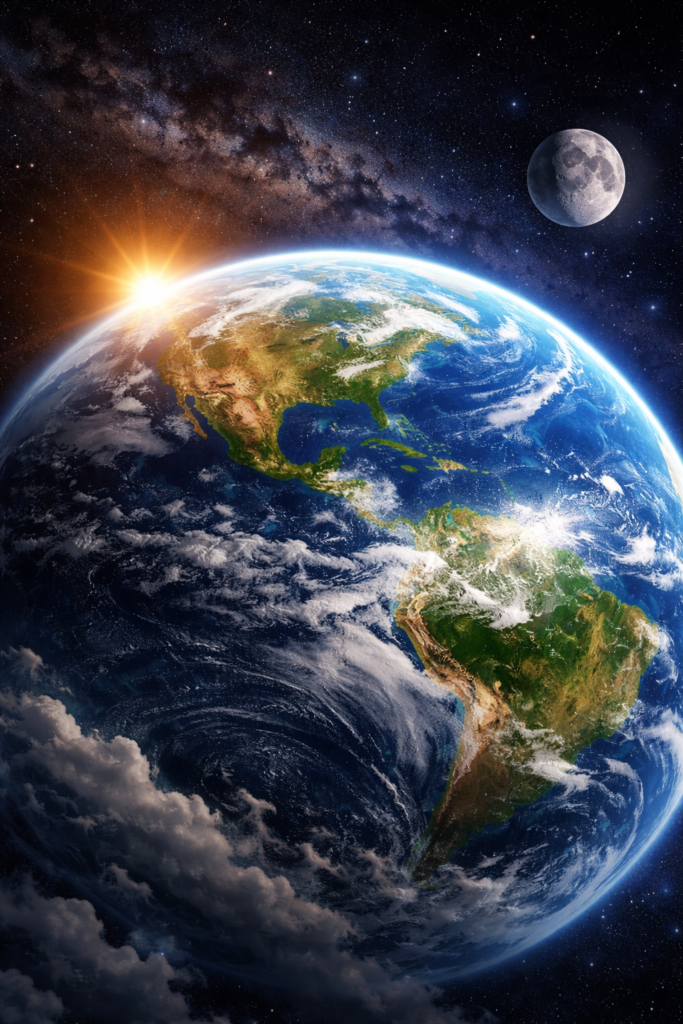
Our home, Earth, is unique because it supports life. With abundant liquid water, a protective atmosphere and a stable climate, Earth provides the perfect conditions for living organisms. Its magnetic field shields it from harmful solar radiation and its Moon plays a key role in stabilizing the planet’s tilt and tides.
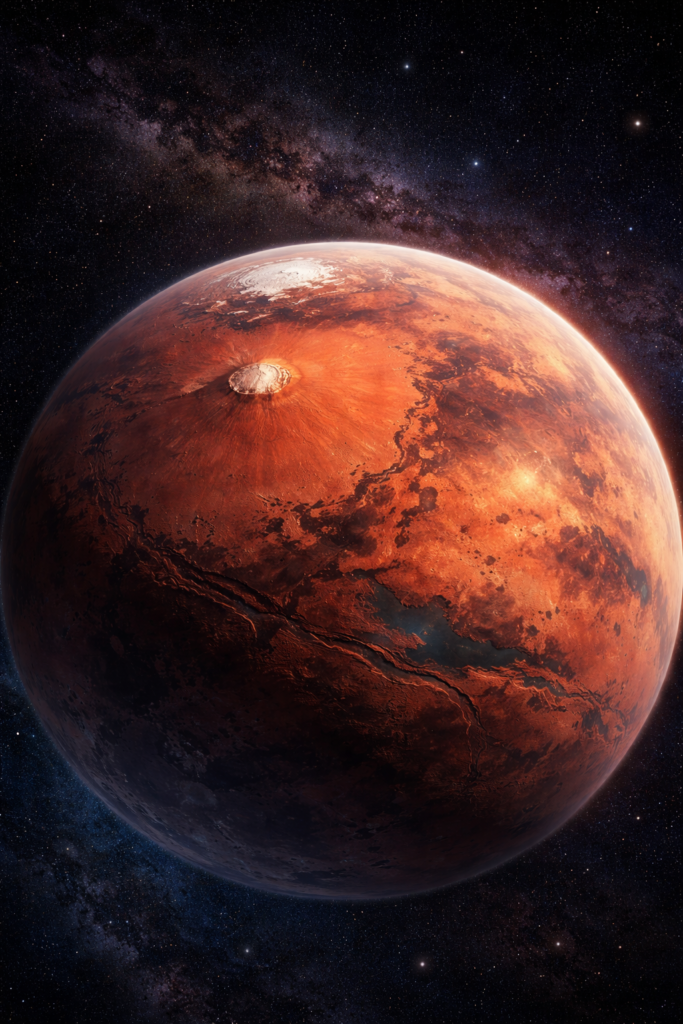
Moving outward, Mars often called the Red Planet has long fascinated scientists. Its reddish appearance comes from iron oxide (rust) on its surface. Mars hosts the largest volcano in the Solar System, Olympus Mons and evidence suggests it once had liquid water. Recent missions have been analyzing Martian soil, revealing the presence of minerals and organic molecules that hint at the planet’s potentially habitable past.
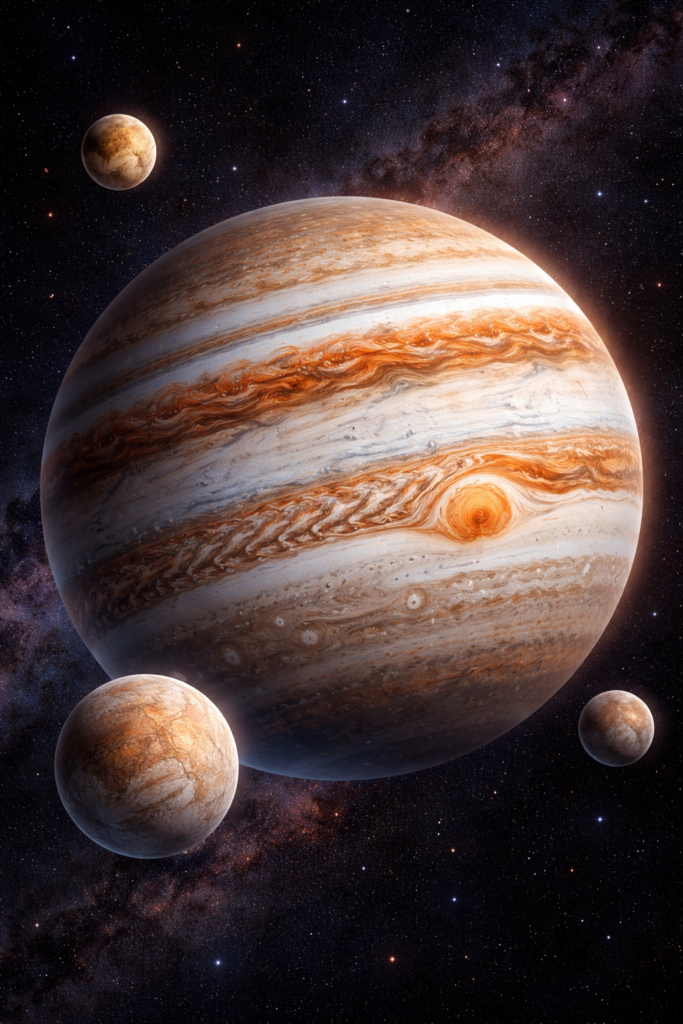
Beyond the rocky planets lie the gas giants. Jupiter is the biggest, known for its massive size and powerful storms including the Great Red Spot a storm that has raged for centuries. Jupiter has dozens of moons, some of which like Europa, may harbor subsurface oceans beneath icy crusts.
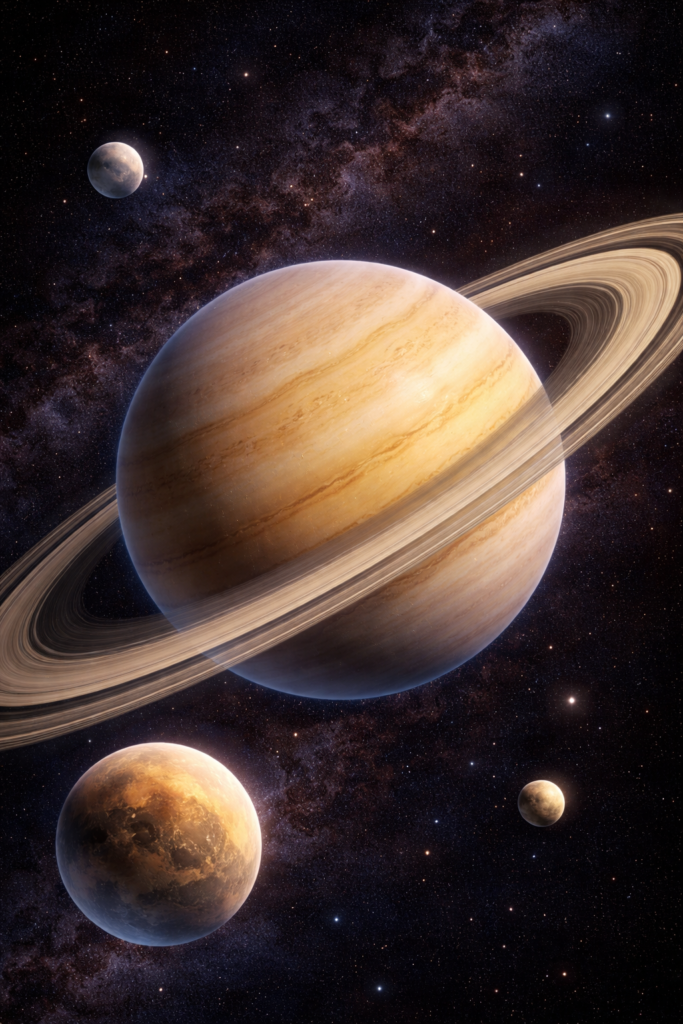
Next is Saturn, famous for its stunning ring system made of ice and rock particles. Though less dense than water, Saturn is still enormous and has many moons including Titan which has a thick atmosphere and lakes of liquid methane making it one of the most intriguing places for study.
Farther out are the ice giants. Uranus rotates on its side likely due to a massive collision in its past. This unusual tilt results in extreme seasons lasting over two decades. Its pale blue color comes from methane in its atmosphere which absorbs red light.
The most distant planet, Neptune, is a deep blue world known for its powerful winds the fastest in the Solar System. Despite its distance from the Sun, Neptune is surprisingly active with storms and atmospheric dynamics that scientists are still trying to understand.
Recent exploration has gone beyond observation to direct analysis. Missions studying soil on Mars have detected complex chemistry including organic compounds and evidence of ancient water activity. Meanwhile, samples from the Moon have revealed insights into the early Solar System including volcanic activity and the history of impacts that shaped planetary surfaces.
Together, these discoveries help scientists piece together how planets form and evolve. By studying both nearby worlds and distant giants, we gain a deeper understanding of our place in the universe and the possibility that life might exist beyond Earth.