
Astronomers Discover Rare Ancient Star Revealing Secrets of the Early Universe
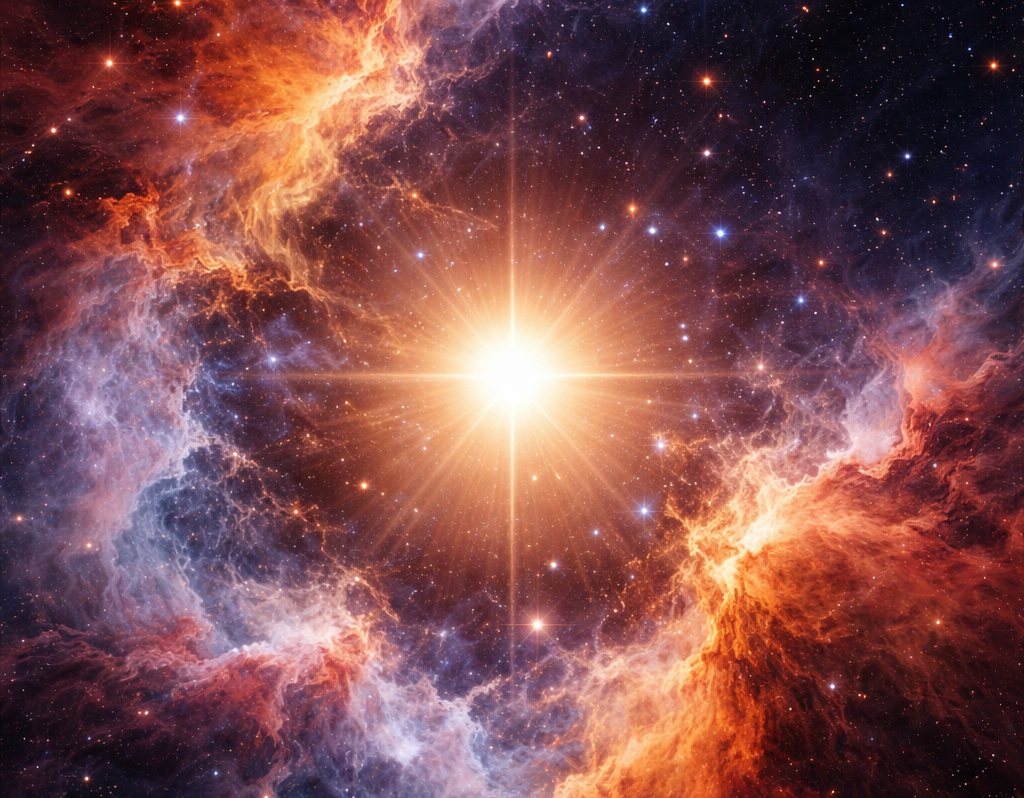
Hello space explorer! Imagine looking up at the night sky and realizing that one tiny point of light is actually a messenger from the very beginning of time. That’s exactly what astronomers have just uncovered a rare, ancient star that may carry the secrets of how our universe first began.
A Cosmic Fossil from the Dawn of Time
In a quiet corner of our galaxy, the Milky Way, scientists have identified an extraordinary star unlike most others. This isn’t just any star it’s what astronomers call a “stellar fossil.” Formed shortly after the Big Bang, this star has remained almost unchanged for billions of years. That makes it a living record of the universe’s earliest days.
What makes this discovery so exciting is how rare such stars are. Most stars evolve, change, or explode over time. But this one has quietly survived, preserving clues from a time when the universe was still young and chaotic.
Simple Explanation — Why This Star Matters
Right after the Big Bang, the universe was mostly made of simple elements like hydrogen and helium. Heavier elements like carbon, oxygen, and iron didn’t exist yet. They were created later inside stars.
This newly discovered star contains extremely low amounts of these heavier elements. That tells scientists it formed before many generations of stars had a chance to “pollute” the universe with new materials. In simple terms, it’s like finding an untouched time capsule from the universe’s childhood.
Exciting Clues Hidden in Starlight
Using powerful observatories like the European Southern Observatory and space missions led by NASA, astronomers anallyzed the star’s light. Every flicker revealed chemical fingerprints tiny hints about what existed billions of years ago.
And what they found was astonishing. The star’s composition suggests it may have formed from material left behind by the very first stars massive, short-lived giants that exploded in spectacular supernovae. These first stars are long gone, but their legacy lives on in this rare survivor.
The Human Story — Why Scientists Are Thrilled
For astronomers, this is more than just data, it’s a dream come true. For decades, scientists have searched for stars like this, hoping to unlock the story of our cosmic origins.
One researcher described it as “finding a needle in a cosmic haystack.” Imagine spending years scanning the sky, and then suddenly discovering a star that has been quietly waiting billions of years to tell its story. It’s moments like these that remind us why humans look up at the stars with wonder.
Curiosity Spark — What Else Is Out There?
If one such ancient star exists, could there be more hidden across the galaxy? Are there even older stars waiting to be found? And what secrets might they reveal about the mysterious first generation of stars the so-called “Population III” stars that we’ve never directly observed?
Each discovery like this opens new questions, pulling us deeper into the mystery of the universe.
Understanding Our Cosmic Origins
This rare star is more than just a scientific curiosity. It’s a bridge connecting us to the very beginning of everything—before galaxies fully formed, before planets existed, before life began.
By studying it, scientists are piecing together the story of how the universe evolved from a hot, simple state into the rich, complex cosmos we see today. In a way, this star helps answer one of humanity’s oldest questions: Where did we come from?
The universe is full of hidden stories, and sometimes, the oldest ones shine the faintest. So next time you look at the night sky, remember—you might be seeing a piece of history billions of years old.
Stay curious, keep exploring, and who knows… the next great discovery might be just one star away.