
April 2026 Full Moon: Everything You Need to Know About the Pink Moon
Greeting
Hello again, sky explorer! If you thought the Pink Moon was just a simple full moon, there’s actually much more hidden in its glow. Let’s go deeper into this beautiful celestial moment.
A Name Rooted in Nature
The “Pink Moon” is a poetic name, inspired by the blooming season of Phlox subulata, one of the earliest spring flowers in North America. Long before modern calendars, Indigenous communities named each full moon to track time and seasons. April’s full moon symbolized rebirth plants growing, animals awakening, and longer days returning.
Other cultures gave it different names too like the “Sprouting Grass Moon” or “Egg Moon” each reflecting life beginning again.
The Science Behind the Glow
A full moon happens when Earth sits directly between the Sun and the Moon. This alignment allows sunlight to fully illuminate the Moon’s surface.
What you’re seeing is sunlight bouncing off dusty, rocky terrain on the Moon called the lunar regolith. That soft glow has traveled about 1.3 seconds across space just to reach your eyes.
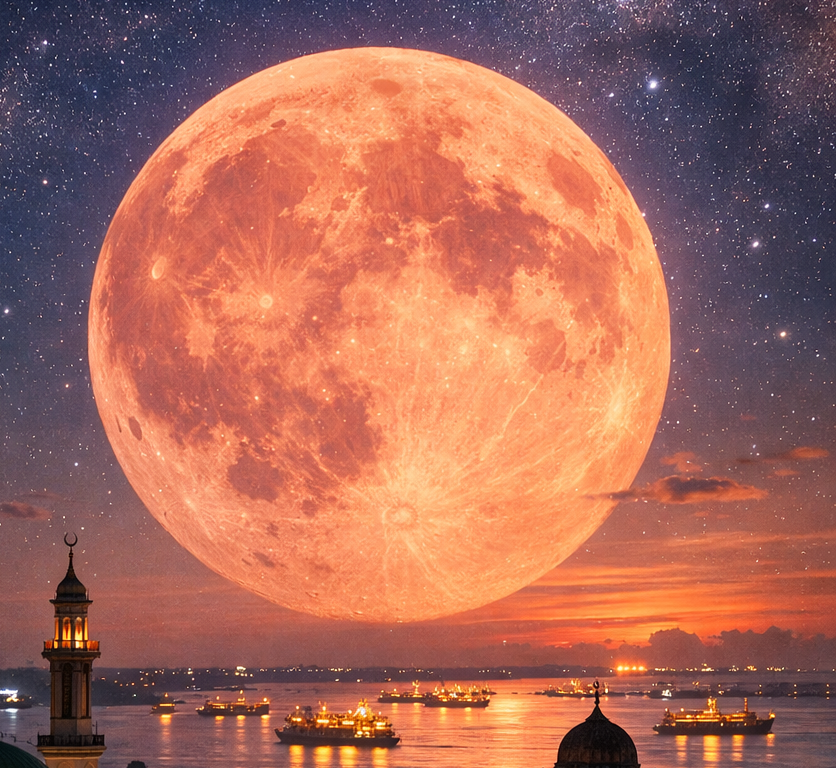
Sometimes, the moon looks orange or golden near the horizon. That’s because of Rayleigh scattering, the same effect that makes sunsets red.
A Human Story Across Time
Think about this on April 1, 2026, millions of people around the world will look up at the same moon. In villages, cities, mountains, and oceans… the same glowing circle.
Centuries ago, farmers would pause their work under this moonlight. Sailors would navigate vast oceans guided by its glow. Lovers wrote poems about it. Children made wishes under it.
Even today, maybe someone in Chattogram will stand on a rooftop, quietly watching, feeling something they can’t quite explain. That feeling? It’s connection to nature, to history, to the universe itself.
Best Time & Viewing Tips
The Pink Moon will reach peak illumination on April 1, but it will appear full for about three nights March 31, April 1, and April 2.
To get the best experience:
- Watch it just after moonrise for that big golden effect
- Look toward the eastern horizon
- Find a place with low light pollution
- Use your phone camera but also take a moment without it
And here’s a fun tip: when the moon is near buildings or trees, your brain compares sizes, making it look huge. This is called the Moon illusion.
Hidden Wonders You Might Miss
Even though it’s called a full moon, the Moon is rarely 100% illuminated to our eyes tiny shadows from craters and mountains still exist.
If you use binoculars, you might notice darker patches called lunar maria ancient lava plains formed billions of years ago.
And here’s something fascinating: every full moon rises roughly at sunset and sets at sunrise perfect timing for an all-night sky companion.
Just like the Moon waxes and wanes, we also go through phases growth, rest, change, and new beginnings.
In a fast-moving world, moments like this slow everything down. And maybe… just maybe… make a wish under the Pink Moon.