
A Galaxy in Your Hand: Comparing Earth’s Sand to the Stars Above
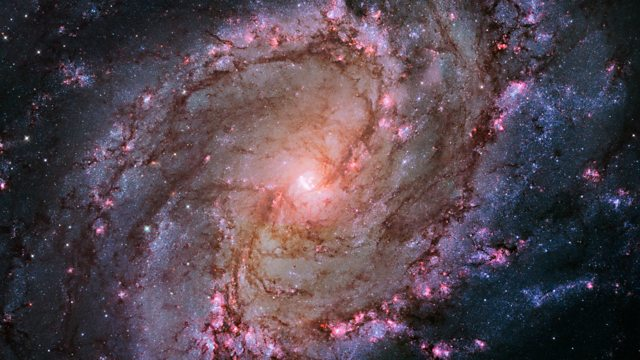
The famous comparison that there are more stars in the universe than grains of sand on Earth is scientifically accurate, but the scale of the difference is even more mind-blowing than most people realize.
According to current astronomical and geological estimates in 2025, there are roughly 10,000 stars for every single grain of sand on Earth.
1. Counting the Sand on Earth
To estimate the sand, scientists look at the total volume of the world’s beaches and deserts.
- The Math: Researchers calculate the total coastline of the world (about 372,000 miles) and multiply it by average beach width and depth. Then they add the volume of the world’s deserts (like the Sahara).
- The Grain: An average grain of sand is about 0.5 mm in diameter. You can fit about 8,000 grains into a single cubic centimeter.
- The Total: The widely accepted estimate is approximately 7.5 * 1018grains of sand.
- In plain English: That is 7.5 quintillion grains (7.5 billion billion).
2. Counting the Stars in the Universe
We cannot count every star individually, so astronomers use a “census” method: they count the number of galaxies in a specific patch of sky and multiply that by the average number of stars per galaxy.
The Galaxy Count
For years, the estimate was 2 trillion galaxies. However, recent data from the New Horizons mission (beyond Pluto) and the James Webb Space Telescope (JWST) in 2024–2025 suggest the sky is “darker” than we thought, leading to a refined estimate of hundreds of billions of galaxies in the observable universe.
Stars per Galaxy
A typical galaxy, like our Milky Way, contains between 100 billion and 400 billion stars. Some “giant” elliptical galaxies have 100 trillion stars, while “dwarf” galaxies have only a few million.
The Total
Using a conservative average of 100 billion stars per galaxy across 200 billion to 2 trillion galaxies:
- The Estimate: Between 1022and 1024 stars.
- In plain English: This is roughly 1 septillion stars (a 1 followed by 24 zeros).
Note on the “Observable” Universe: These star counts only include the part of the universe we can see (light has had time to reach us). Because the universe is expanding, the total universe is likely much larger, and possibly infinite, meaning the number of stars could be truly endless.
4. Where the Comparison Breaks
If you want to flip the script, there is one place where Earth wins: Atoms.
While there are more stars than grains of sand, there are more atoms in a single grain of sand than there are stars in the entire observable universe.
- Stars in Universe ~ 1024
- Atoms in one grain of sand ~ 1019 to 1020(Okay, Earth almost wins here—actually, you’d need about 10,000 grains of sand to have more atoms than there are stars in the sky!)
Heard you’re looking for the Axiebet88 download? Well, I just did it myself and it was smooth sailing. No sketchy stuff, just a quick download and install. The mobile experience is pretty good too. Grab it here: axiebet88download
Right, let’s be honest, mmliveapk isn’t your average betting site! Plenty of entertainment options. Give it a peek and see what you think: mmliveapk
Trying to get into 747 Live? The sign in process is pretty straightforward. Best of luck! 747 live sign in
Yo, check out ae48888, seen some people talking about it being great. Worth checking if you’re looking for somewhere new. ae48888
PH88 Casino, eh? Heard they got some tight slots. Good luck out there folks! ph88 casino
canadian pharmacy review
buy drugs online
canadian pharmacy no prescription
pharmacy review
canada drug prices
canada pharmacies
mail order pharmacy canada
drugstore online shopping
best online canadian pharmacy review