Science in Microgravity: Expedition 73 Research and Crew Operations on the ISS

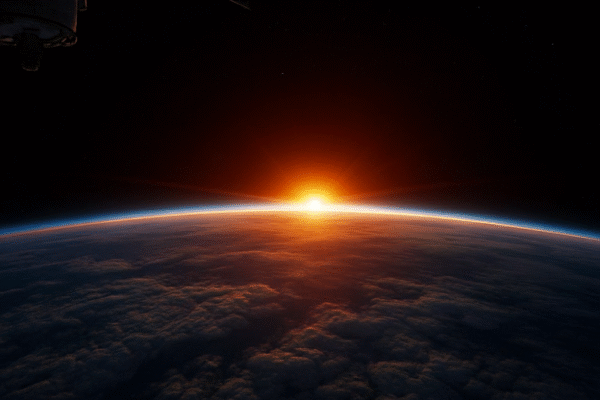
Orbital Research and Crew Operations Aboard the International Space Station An orbital sunrise illuminated Earth’s atmosphere and cloud tops in a photograph captured from the International Space Station as it orbited approximately 264 miles above the Czech Republic in Eastern Europe NASA Flight Engineer Zena Cardman dedicated her day to human research activities, including blood…

Read More

Sparks on the Red Planet: Perseverance Rover Confirms Martian Dust Devils are Electric

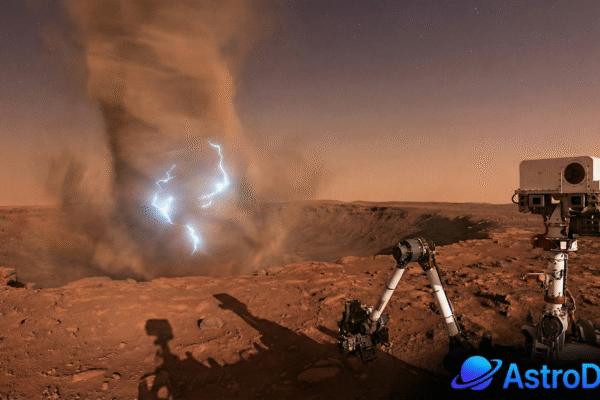
NASA’s Perseverance rover has just confirmed something scientists have suspected for decades: The “Dust Devils” of Mars aren’t just swirling wind—they are crackling with electricity.​ For the first time in history, audio recordings from the Red Planet have captured the sounds of electrical discharges (sparks) and mini-sonic booms coming from these Martian twisters. This discovery,…

Read More

Jupiter’s Galilean Moons: Io, Europa, Ganymede, and the Search for Extraterrestrial Water

As of late 2025, Jupiter currently holds the record for the most moons of any planet in our solar system, with 95 officially recognized by the International Astronomical Union (IAU). The actual current count of known moons, including those awaiting official naming, is 97. Key Facts About Jupiter’s Moons The number of confirmed moons for…

Read More

The Earth-Moon-Sun System: Geometry of Seasons & Eclipses

The Earth–Moon–Sun System A perfectly balanced cosmic dance controlled by gravity and motion. The Earth–Moon–Sun system is a gravitational system where three celestial bodies move in a perfectly balanced pattern. The Earth revolves around the Sun once every 365.25 days and rotates on its axis every 24 hours, creating day and night. The Moon revolves…

Read More

December 2025 Sky Report: Essential Astronomical Events for Observation

December 2025 presents a compelling series of celestial phenomena, offering both novice and seasoned observers excellent opportunities for stargazing. This report details the month’s most significant astronomical events. 1. The Super Cold Moon The year concludes with the final Full Moon, presenting unique characteristics for observation. 2. The Geminid Meteor Shower Regarded as the most…

Read More

SCIENCE SHOCK: Black Hole Theory Crumbles as Magnetic Fields Unlock the “Forbidden” Zone.

The “Impossible” Black Hole Mystery The mystery centers on the Pair-Instability Mass Gap. Current theory suggests that black holes formed from the collapse of massive stars shouldn’t exist in the range of approximately 70 to 140 times the mass of the Sun (70 Mʘ to 140 Mʘ). The Solution: Magnetic Fields Astrophysicists used advanced computer…

Read More