A Galaxy with a Twist: Why the Center of the Milky Way Smells Like Rum
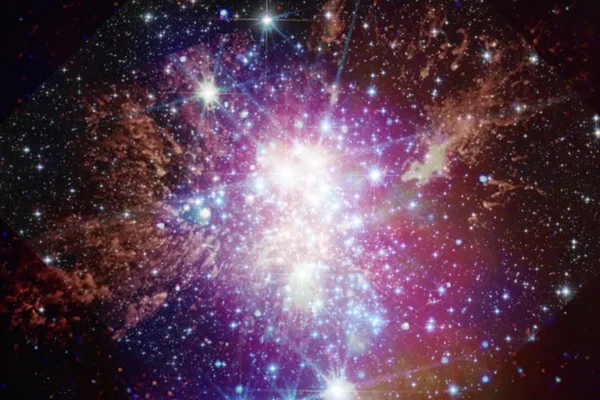
It sounds like a headline from a science fiction novel, but it’s actually a fascinating discovery in radio astronomy. In 2009, astronomers searching for the building blocks of life in deep space found that the center of our galaxy contains a chemical compound responsible for the flavor of raspberries and the smell of rum. Here…
Exploring the Moon’s Unequal Hemispheres
The Moon is unique among large natural satellites because it shows two hemispheres that are strikingly different in appearance, composition and geological history. These hemispheres are commonly called the near side (the side always facing Earth) and the far side (the side that faces away from Earth). This difference is not due to chance or…
A Galaxy in Your Hand: Comparing Earth’s Sand to the Stars Above
The famous comparison that there are more stars in the universe than grains of sand on Earth is scientifically accurate, but the scale of the difference is even more mind-blowing than most people realize. According to current astronomical and geological estimates in 2025, there are roughly 10,000 stars for every single grain of sand on…
Mythological and Scientific Views of the Sun and Moon
The Sun and the Moon have always occupied a central place in human understanding of the universe. From ancient civilizations to modern science, these celestial bodies have been interpreted in different ways to explain natural phenomena, time and life itself. This paper explores both the mythological interpretations and the scientific explanations of the Sun and…
The Space Growth Spurt: Why Astronauts Get Taller in Microgravity
That is absolutely true! If you spent a few months on the International Space Station (ISS), you would likely return to Earth about 2 inches (5 cm) taller than when you left. While gaining a couple of inches of height sounds like a “space superpower,” the reason behind it is actually quite simple—and it’s more…
Reading Time Written on the Moon’s Surface
1. Introduction: Why Lunar Craters Matter The Moon’s surface is covered with countless craters formed by asteroid and meteorite impacts over billions of years. Unlike Earth, the Moon lacks an atmosphere, weather and active plate tectonics so these craters remain preserved for extremely long periods. Because of this preservation, lunar craters act like time machines…
The Fossil Bulge: Why the Moon is Shaped Like a Lemon
While it looks like a perfect silver coin in the night sky, the Moon is technically an oblate spheroid—a sphere that is slightly flattened at the poles and bulged at the center. However, planetary scientists often go a step further and describe it as lemon-shaped because it has two distinct bulges: one on the side…
Lunar Recession: The Mechanics and Future of the Earth-Moon System
It may like a plot from a sci-fi movie, but the Moon is indeed drifting away from Earth. This phenomenon is known as Lunar Recession, and it has been occurring since the Moon first formed about 4.5 billion years ago. Here is the full breakdown of how it works, how we know, and what the…
Gravitational Relationships Between the Sun, Earth and Moon
1. What Is Gravitational Relationship Gravitation is a mutual attractive force between any two masses in the universe. According to Newton’s Law of Universal Gravitation: F = G(m1*m2/r^2) Where: More mass = Stronger gravityMore distance = Weaker gravity 2. The Three-Body System: Sun–Earth–Moon The Sun, Earth and Moon form a gravitationally bound three-body system where…
A Red Planet with a Blue Heart: The Science of Martian Sunsets
Standing on the surface of Mars at dusk offers a surreal reversal of the Earthly experience. While we are used to a blue sky during the day that bleeds into a fiery red and orange sunset, Mars does the exact opposite. On the Red Planet, the daytime sky is a murky butterscotch color, but as…